





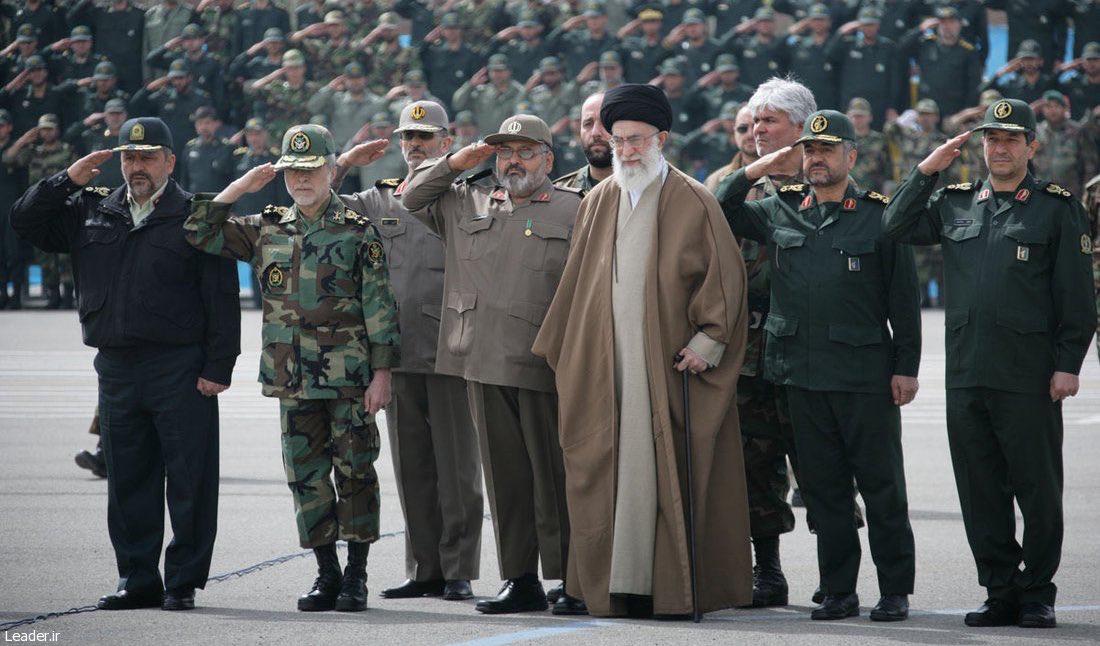
February 28, 2026, In what may be the most seismic political assassination since the killing of Archduke Franz Ferdinand, Iran’s Supreme Leader Ayatollah Ali Khamenei has been confirmed dead, along with Defense Minister Amir Nasirzadeh and Islamic Revolutionary Guard Corps (IRGC) Commander Mohammad Pakpour, following coordinated joint strikes by the United States and Israel on Saturday. The killings have decapitated Iran’s military and political leadership in a single day, throwing the Islamic Republic into an unprecedented succession crisis and plunging the Middle East into a new and unpredictable era.
The joint Israeli-US strikes had been planned for months and included the targeting of sites where senior Iranian officials were convening. “Three sites where gatherings of the Iranian terror regime were taking place were struck simultaneously, and several senior figures essential to the management of the campaign and the regime’s governance were eliminated,” an Israeli military official said.
ALSO READ: The United States and Israel Attack Iran, a Region on Fire
IDF spokesperson Effie Defrin confirmed on Saturday evening that several senior Iranian officials were killed in two strikes carried out earlier in the day. IRGC Commander Mohammad Pakpour, Defense Minister Amir Nasirzadeh, Supreme Leader adviser Ali Shamkhani, and chief of staff of the Iranian Armed Forces Mohammad Bagheri were killed in an Israeli strike in Tehran.
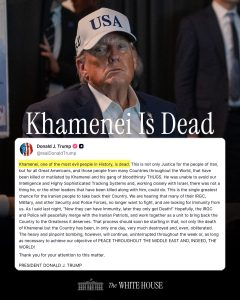
Then came the confirmation the world had been waiting for. Israeli officials reported that Iranian Supreme Leader Ayatollah Ali Khamenei was dead, with his body found following the strikes. Trump celebrated the news in a post on Truth Social, calling Khamenei “one of the most evil people in History” and saying his killing was “justice” for Americans and others killed by Iran over the decades. Trump appeared to confirm that U.S. intelligence played a direct role in tracking and targeting Khamenei, saying the ayatollah “was unable to avoid our Intelligence and Highly Sophisticated Tracking Systems.”
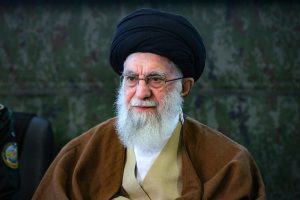
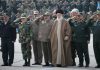
The 86-year-old Khamenei led Iran for over 36 years, making him one of the world’s longest-serving authoritarian rulers. He took power in 1989 following the death of revolutionary founder Ayatollah Ruhollah Khomeini, and spent 35 years consolidating near-total control over the Iranian state. As supreme leader, he held authority over the judiciary, state media, and all security forces, including the IRGC. He wielded that power ruthlessly against dissent, and thousands of protesters were killed under his watch during the most recent nationwide uprising.
Khamenei had reportedly been relocated to a secure bunker in the days before the strikes as U.S. military forces assembled in the region and threats escalated. It was to no avail. Reports indicate that approximately 30 bunker buster bombs were dropped on his compound, with Trump later describing the operation as having tracked Khamenei through highly sophisticated intelligence systems.
Prime Minister Benjamin Netanyahu issued a statement saying that the operation aimed to remove the Ayatollah’s regime from power, and that the operation “will create the conditions for the brave Iranian people to take their destiny into their own hands.” Netanyahu added: “For 47 years, the Ayatollah regime has called for ‘Death to Israel’ and ‘Death to America.’ It has spilled our blood, murdered many Americans, and massacred its own people.”
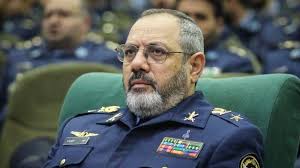
Nasirzadeh had served as the Deputy Chief of Staff for the Iranian Armed Forces before assuming the role of Defense Minister. He began his military career as a fighter pilot, rising through the ranks to become one of the most senior figures in Iran’s national security establishment. His death eliminates one of the primary architects of Iran’s military response to the June 2025 conflict and its renewed posture in the current escalation.
The strikes killed Nasirzadeh as part of a broader campaign aimed at dismantling Iran’s leadership and military capabilities. Sources close to Iran’s establishment confirmed that several other senior Revolutionary Guards commanders and political officials also died in the attacks, though authorities have not released a full casualty list.
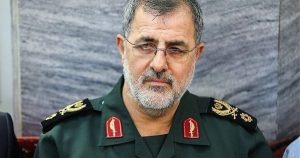
The death of IRGC Commander Mohammad Pakpour carries a particular historical weight. Pakpour had only recently taken command of the IRGC, having succeeded Hossein Salami, who was himself killed by Israel at the beginning of the 12-day war in June 2025. Pakpour was appointed IRGC commander on June 13, 2025. He held a PhD in Political Geography and had joined the IRGC in 1979 during the Iranian Revolution, also serving during the Iran-Iraq War.
His killing means that the IRGC, Iran’s most powerful military and political institution, responsible for both domestic repression and regional proxy operations, has now lost two commanders in less than a year. The organization’s chain of command has been shattered at the highest level.
The simultaneous elimination of so many senior figures has left Iran without an obvious path forward. Under Iran’s constitution, an interim council assumes power while the Assembly of Experts, a body of 88 Islamic clerics, selects a new supreme leader. But Israel says its opening strikes decimated the chain of command, killing seven senior defense and intelligence officials and targeting 30 top military and civilian leaders overall. One senior official who survived is Ali Larijani, secretary of Iran’s supreme national security council, former parliament speaker, and one of Khamenei’s closest confidants. With much of the leadership killed, Larijani has emerged as the most senior civilian official still standing.
In an overnight video address, Trump called for the Iranian people to remain in their homes during the bombing campaign but rise and “take over your government” when it concludes. Iran’s exiled former crown prince Reza Pahlavi, a leading opposition leader, also called for the Iranian people to take to the streets, urging Iranian security forces to “join the nation and help ensure a stable and secure transition.”
Despite the catastrophic blow, Iran has not gone silent. Iranian officials have vowed devastating retaliation, and missile strikes against Israel and U.S. military installations across the Gulf were already underway Saturday. But with its supreme leader dead, its defense minister eliminated, and its IRGC command structure in ruins, the Islamic Republic’s ability to mount a coherent and sustained military response is now deeply in question.
The world is watching a regime that has governed Iran for nearly five decades teetering on the edge of collapse and wondering what, and who, comes next.
This is a rapidly developing story. All leadership casualty assessments are based on statements from Israeli and U.S. officials as of Saturday evening, February 28, 2026. Iran has not officially confirmed the deaths of its senior leaders.