




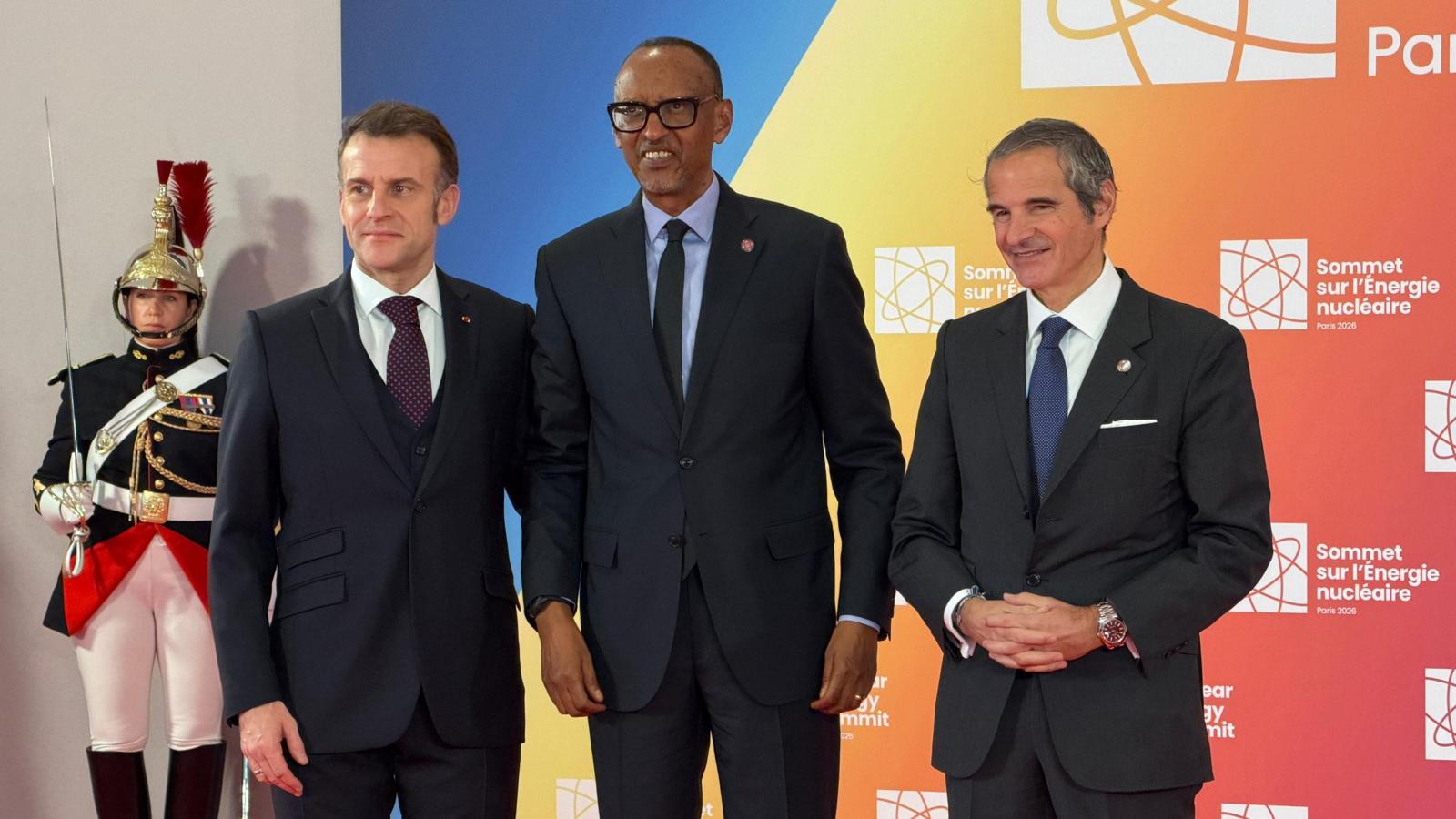
President Paul Kagame addressed world leaders in Paris on Tuesday at the Second International Nuclear Energy Summit, making a forceful case for nuclear power as Africa’s path to industrialisation while announcing that Rwanda will host a landmark nuclear innovation summit for the continent later this year.
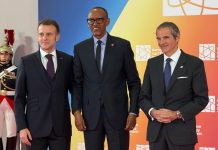
PARIS — President Paul Kagame stood among roughly 60 world leaders at the La Seine Musicale on Tuesday as French President Emmanuel Macron formally opened the Second World Nuclear Energy Summit, which has quickly become the premier international forum on the future of civilian nuclear power. Organised in close partnership with the International Atomic Energy Agency (IAEA) and attended by heads of state, financiers, regulators, and industry chiefs, the summit signalled a decisive shift in global attitudes toward nuclear energy after more than a decade of hesitation following the 2011 Fukushima disaster.
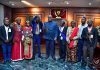
For Rwanda, Kagame’s presence in Paris was far more than symbolic. Accompanied by officials from the Rwanda Atomic Energy Board (RAEB), the president took to the podium to deliver one of the summit’s more pointed appeals, urging the international community to back developing nations with the financing and technology transfers needed to build safe nuclear infrastructure. “Rwanda aims to be a high-income country by 2050,” Kagame told assembled leaders, industry executives, and regulators. “That requires abundant electricity, and that is why we have decided to make nuclear central to our strategy.”
ALSO READ: Kagame and Tshisekedi Skip EAC Summit, Send Envoys to Arusha
Rwanda’s nuclear ambitions are anchored in a planned investment of $5-$6 billion in its first nuclear power plants, with a strategic focus on small modular reactors (SMRs) suited to the country’s existing grid. The programme aims to contribute to Rwanda’s ambitious national electricity generation target of 5 gigawatts by 2050, providing the baseload power required for energy-intensive sectors such as manufacturing, data centres, and mineral processing, which are central to Rwanda’s economic transformation.
Kagame noted that Kigali has already begun laying the institutional and technical foundations for the programme. Hundreds of specialists have been trained in nuclear science and engineering, with the government targeting a workforce of approximately 230 highly skilled professionals in operations and regulation by 2028. These preparations, he argued, reflect not ambition for its own sake, but a calculated and responsible approach to introducing nuclear technology safely.
A central theme of Kagame’s remarks was the need to dismantle the perception that nuclear energy is too complex or too risky for developing nations. “Nuclear energy is not too complex or risky for developing countries,” he said, pointing to the universal regulatory framework established by the IAEA as evidence that the standards needed for safe operation are within reach of nations at every income level.
Yet the more immediate obstacle, Kagame made clear, is financial. Nuclear energy projects require bespoke financing structures that remain unfamiliar to many multilateral development banks, he argued, calling on international financial institutions to broaden their support. He welcomed the World Bank’s recent move to reconsider its longstanding restrictions on financing nuclear projects, a shift that followed sustained pressure from governments during global climate talks. Still, he stressed that the policy change must now translate into real capital for countries ready to act.
Beyond financing, Kagame also called for deeper cooperation in technology development and for new nuclear nations to be integrated into global supply chains, a pathway he described as essential to building local skills and industrial capacity over the long term.
In one of the summit’s more concrete announcements, Kagame revealed that Rwanda will host the 2026 Nuclear Energy Innovation Summit for Africa in Kigali. The event will convene leaders from government, finance, and the nuclear industry to push forward discussions on the continent’s role in the global nuclear future. The announcement positions Kigali as a hub for African nuclear dialogue, signalling Rwanda’s intention not merely to be a consumer of nuclear technology but also to be a regional driver of its adoption.
“Rwanda is ready to do what it takes to power our development with nuclear energy,” Kagame told the assembled leaders, a statement that drew on both the infrastructure groundwork already laid and the political will backing the programme at the highest levels of the Rwandan state.
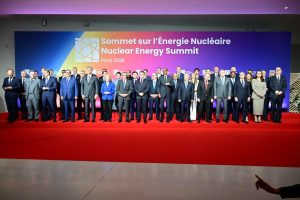
President Macron opened the summit, with IAEA Director General Rafael Mariano Grossi and European Commission President Ursula von der Leyen underscoring nuclear energy’s renewed importance in meeting the twin imperatives of decarbonisation and energy security. The event follows the inaugural summit held in Brussels in March 2024. It reflects growing political momentum behind nuclear energy, prompting the IAEA to raise its global capacity projections for the fifth consecutive year. In its most optimistic scenario, the Agency now estimates that world nuclear capacity could nearly triple from 377 gigawatts at the end of 2024 to 992 gigawatts by 2050.
Afternoon sessions at La Seine Musicale moved from high-level statements to technical panel and roundtable discussions addressing three core tracks: regional strategies for nuclear deployment, conditions for financing projects at scale, and the development of advanced reactor technologies. The format reflected the summit’s ambition to produce not just political declarations but actionable frameworks that countries, financial institutions, and industry can build on.
Tuesday’s gathering marks the beginning of a broader series of nuclear-focused events. A nuclear policy council is scheduled for March 12, as international stakeholders seek to translate summit discussions into concrete governance and investment frameworks. For Rwanda, the weeks ahead represent an opportunity to deepen the bilateral and multilateral relationships that will be essential to moving its nuclear programme from planning to construction.
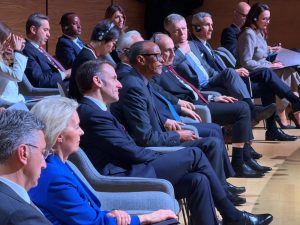
The Paris summit also comes amid a renewed focus on nuclear energy ahead of the upcoming Review Conference of the Parties to the Treaty on the Non-Proliferation of Nuclear Weapons, where questions about the expansion of civilian programmes among emerging economies are expected to feature prominently.
For Kagame, who has long cast Rwanda’s development story as proof that small, landlocked nations can defy geography and expectation, the Paris summit offered a global platform to press the case that nuclear energy is not a privilege of wealthy, established powers but a tool that Africa, too, must be allowed to wield in its own development.