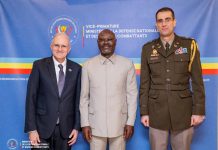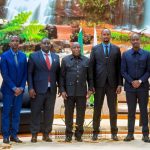

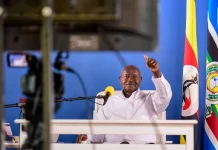
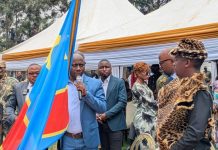
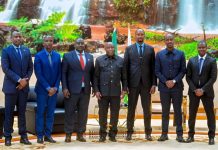
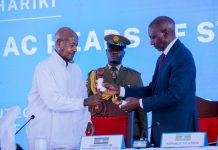
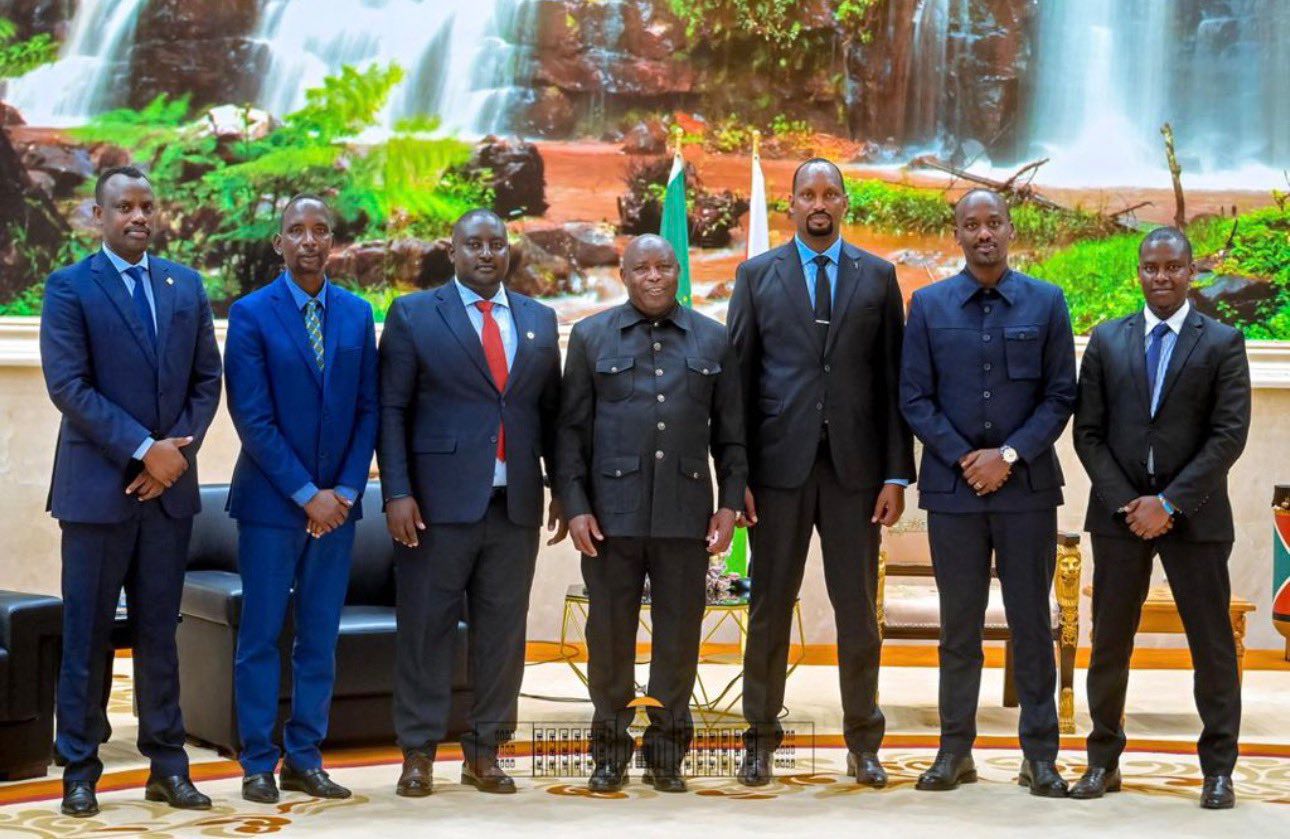
President Ndayishimiye of Burundi, the African Union’s Chairperson, and a key military actor in South Kivu, held an unprecedented formal meeting with a Banyamulenge delegation at the Ntare House State Palace. The public statement that followed named Rwanda’s alleged support for Red Tabara in attacks against the community. This diplomatic signal, barely noticed by the world, may be one of the most consequential developments yet in the war’s southern theatre.
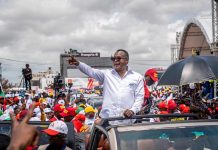
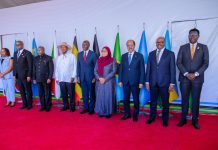
A meeting held at the Ntare House State Palace in Bujumbura, in its brevity and symbolism, encodes an entire chapter of the Great Lakes crisis that the world has barely begun to read. Burundi’s President Evariste Ndayishimiye, the rotating Chairperson of the African Union for 2026, formally received a delegation representing the Banyamulenge community of South Kivu, Democratic Republic of Congo. Images from the meeting were shared on the official X account of the Burundi State House, a public gesture of recognition that regional analysts describe as rare and significant.
The Banyamulenge are a Congolese Tutsi community that has lived on the high plateaux of South Kivu, in territories including Minembwe, Bijombo, Mikenge, and Fizi, for centuries. They are one of the most embattled civilian communities in eastern Congo: surrounded by hostile armed groups, blockaded from humanitarian aid, denied access to their ancestral grazing lands, and caught in the crossfire of a regionalized war in which powerful states pursue their own interests with the Banyamulenge’s survival as a secondary concern at best.
ALSO READ: AFC/M23 Accuses Kinshasa of Escalating Fighting in South Kivu
The public statement that followed the meeting in Bujumbura went further than diplomatic language normally permits. It recalled Rwanda’s alleged support for the Red Tabara armed group in attacking Banyamulenge civilians, a pointed accusation from a head of state who is simultaneously the continent’s most senior diplomatic figure and the commander of over 12,000 troops deployed inside the DRC. That combination of roles makes this meeting and its public framing one of the most diplomatically sensitive moments in the southern theatre of the Congo war.
“Sharing the President of Burundi’s meeting with the Banyamulenge delegation is very uncommon. The public statement that followed the meeting is highly specific as it recalls Rwanda’s support to Red Tabara in attacking Banyamulenge civilians.”— Regional analyst, Great Lakes conflict observer
The Banyamulenge are a Congolese community of Tutsi origin who settled in what is now South Kivu between the 16th and 18th centuries, migrating from present-day Burundi, Rwanda, Tanzania, and Uganda. They are primarily cattle herders, occupying the high-altitude plains of southern South Kivu, in the territories of Fizi, Mwenga, and Uvira. Despite centuries of presence on Congolese soil, their citizenship has been repeatedly contested, and they have been systematically portrayed by political actors and armed groups as foreign implants loyal to Rwanda.
That contestation of their identity has had lethal consequences. In the 1990s, the Congolese state sought to expel them following a parliamentary resolution targeting Rwandan and Burundian nationals. Since then, successive waves of violence have reduced the Banyamulenge to a besieged remnant. Militias, the Mai-Mai, the Biloze Bishambuke, and others, have vowed to expel or eliminate them. Armed groups, including FARDC units, have at times coordinated with or tolerated attacks on Banyamulenge villages. Since 2017, the Burundian rebel group Red Tabara has joined these attacks, and UN reports have documented alleged Rwandan logistical support for Red Tabara, a charge Kigali disputes.
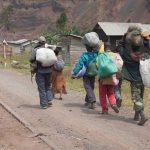
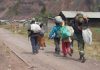
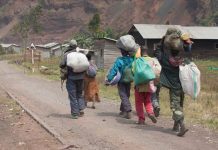
Today, the surviving Banyamulenge are confined to a handful of localities: Minembwe, Murambya/Bijombo, Mikenge, and Bibokoboko, effectively under siege. Humanitarian organizations have been denied access to their communities. The community cannot access pasture or farmland beyond a two-kilometer radius of their settlements. Their leaders have repeatedly appealed to international bodies, including sending formal letters to Ndayishimiye in his capacity as EAC Chairperson, warning of what they described as a plan of ethnic cleansing. Those letters had not previously elicited a public response.
Red Tabara is a Burundian rebel group that emerged from the political crisis of 2015, following an attempted coup against then-President Pierre Nkurunziza that failed and led to thousands of Burundians fleeing into exile. The group’s political leadership operates from abroad. At the same time, its fighters have been active in South Kivu, particularly in Uvira territory, conducting attacks on Burundian targets and, according to multiple sources, also against Banyamulenge civilians. The Burundian government and the UN Panel of Experts have long accused Rwanda of sheltering, financing, and supporting Red Tabara, a charge Kigali consistently denies.
The post-meeting statement from Bujumbura’s State House was therefore highly specific in a context where diplomacy usually traffics in generalities. By publicly naming Rwanda’s alleged support to Red Tabara in the context of attacks on Banyamulenge civilians, Ndayishimiye did something that neither the United Nations, the United States, nor the European Union has been willing to do on the southern dimension of the South Kivu crisis: he drew a direct line between a named state actor and the targeting of a named civilian community.
Ndayishimiye’s reception of the Banyamulenge delegation is impossible to understand without confronting the profound contradiction it embodies. The President of Burundi is simultaneously: the Chairperson of the African Union, charged with promoting peace and impartiality across the continent; and the commander-in-chief of over 12,000 Burundian troops deployed in South Kivu under bilateral arrangements with Kinshasa troops that the Banyamulenge diaspora and community leaders have directly accused of participating in the blockade of their villages and of operating alongside forces hostile to their community.
KT Press and other regional analysts have raised the question directly: Can a nation with boots on the ground be perceived as an impartial broker? Burundian troops have been accused of besieging the Minembwe region, of operating alongside FDLR elements and Wazalendo militias, and of conducting drone and artillery strikes that Rwandan President Paul Kagame, though no friend to Burundi, described as killing civilians. These accusations are contested by Bujumbura, which frames its intervention as a duty of regional solidarity and a fight against Red Tabara.
The meeting in Bujumbura does not resolve this contradiction. But it does introduce something new: a formal, publicly documented channel between the Banyamulenge leadership and the head of state whose military they have accused of harming them. Whether that channel leads to anything, a cessation of hostile operations, a humanitarian corridor, a political commitment, remains to be seen. What is clear is that Ndayishimiye chose to make the meeting public. That choice, in the context of the Great Lakes’ opaque diplomacy, is itself a signal.
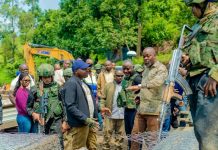
The Bujumbura meeting comes as the military situation in southern South Kivu deteriorates sharply. The State House’s own X account framed it as “a new development to watch for, as the war is escalating in southern South Kivu and surrounding areas.” The Twirwaneho armed group, composed primarily of Banyamulenge fighters and a key military ally of M23 in the south, seized the strategic position known as “Point Zero” in Fizi territory in January 2026, after two days of intense fighting against a combined force of FARDC troops, Burundian soldiers, and Wazalendo militiamen. FARDC, FNDB, and Wazalendo units retreated to Mulima and Mutambala following the fall.
This southern front, stretching through Fizi, Uvira, and the highlands of Minembwe, has received almost no international attention compared to the drone strikes and diplomatic drama of the Goma-Bukavu theatre. But it is strategically significant. Burundian military involvement in South Kivu has been deeper and more sustained than is generally acknowledged; the number of FNDB troops deployed there has reached over 12,000 by recent estimates, more than any other foreign force in the province. And the conflict there carries a demographic dimension that North Kivu does not: the direct physical targeting of a distinct civilian community whose identity, citizenship, and right to exist in eastern Congo is actively contested.
The war in eastern Congo has never been a single conflict. It is a series of overlapping crises, each with its own history, its own actors, and its own civilians caught in the crossfire. The southern front of South Kivu, and the Banyamulenge question at its heart, is one of the most urgent and least understood of those crises. What happened in Bujumbura this week is a signal that at least one powerful actor has decided to look directly at it. The world should follow.