





According to exclusive reporting, Brussels is considering routing funds to Maputo, which would pass an equivalent sum to Kigali, to avoid direct transactions with a sanctioned military while preserving the security umbrella over TotalEnergies’ $20 billion gas project in Cabo Delgado.
The European Union is considering continuing to financially support Rwanda’s military deployment in Mozambique despite US sanctions imposed on the Rwanda Defence Force, and among the options being actively examined is a financial workaround in which Brussels would send funds to Mozambique, with Maputo passing an equivalent amount to Kigali. The arrangement would allow the EU to avoid a direct financial relationship with a sanctioned entity while keeping alive the security mission that protects European energy interests in Cabo Delgado.
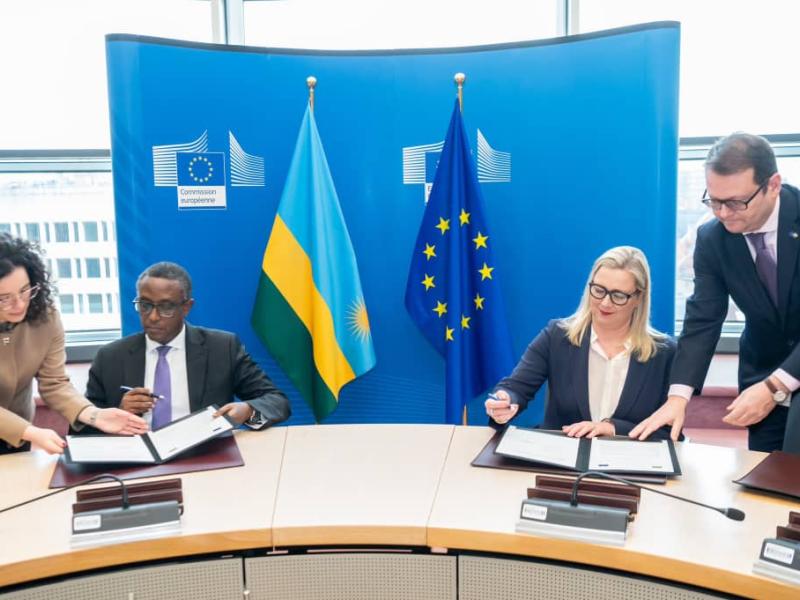
The exclusive reporting comes as the EU Commission has confirmed it is in “continuous dialogue” with Mozambique on “security measures” in Cabo Delgado, notably declining to say that funding to Rwanda is definitively over, even as it publicly stated that its existing European Peace Facility support for the RDF expires in May with no plans for direct renewal. The diplomatic language from Brussels this week has been carefully calibrated to leave a door open.
ALSO READ: Kagame at Paris Nuclear Summit, Power Africa or Fall Behind
On March 2, the US Treasury’s Office of Foreign Assets Control sanctioned the Rwanda Defence Force as an entity, not merely individual commanders, for its support of the AFC/M23 rebel coalition in eastern Congo. The designation carries sweeping implications: any financial institution or government body that engages in transactions with the RDF risks exposure to secondary US sanctions. The Trump administration has shown willingness to use secondary sanctions as leverage across multiple diplomatic fronts.
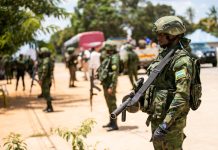
For the EU, this created an immediate problem. Brussels had already approved €20 million in European Peace Facility (EPF) funding for the RDF’s Mozambique deployment — covering personal equipment and logistics costs for approximately 4,000 Rwandan troops guarding TotalEnergies’ LNG construction site at Afungi in Cabo Delgado. Paying that money directly to the RDF after the sanctions designation risks triggering exactly the kind of secondary exposure the EU is trying to avoid, particularly at a moment of already acute EU-US trade tensions.
The Irish Times reported this week that the EU’s reluctance to renew funding is not primarily about the money; the €20 million is, as multiple sources have noted, less than 10 percent of what Rwanda actually spends on the Mozambique mission, which Kigali estimates at hundreds of millions of dollars annually. The problem is the legal and diplomatic exposure of being seen to fund a US-sanctioned military while the Trump administration is pressing the EU on other fronts.
“Renewing support for the Rwandan operation in Mozambique could expose the EU to secondary sanctions, which the Trump administration could use as leverage in its various disputes with Brussels.”— The Irish Times, March 19, 2026
Under the proposed workaround, the EU would direct funds to the Mozambican government, a transaction that carries no sanctions risk, since Maputo is not a designated entity with Mozambique, then passing an equivalent sum to Rwanda under the bilateral Status of Forces Agreement the two countries signed in August 2025. The net financial result would be identical to a direct EU-to-Rwanda payment, but the formal transaction chain would involve no direct EU engagement with the sanctioned RDF.
The EU Commission spokesperson’s statement this week that Brussels is in “continuous dialogue” with Mozambique on how to “best support” the country in “security measures” while stressing that the bilateral Rwanda-Mozambique deployment arrangement is a matter “between the two countries” is consistent with precisely this kind of indirect funding structure being under active consideration. Brussels is pointing Maputo toward being the formal recipient, even if the ultimate beneficiary would be Kigali.
Mozambique’s President Daniel Chapo was in Brussels this week, where he pressed EU officials to continue supporting counterterrorism operations in Cabo Delgado. He also met TotalEnergies CEO Patrick Pouyanné, who confirmed the LNG project would continue. The Mozambican government has publicly expressed “concern” and “shock” at the EU funding lapse, and has been actively seeking alternatives, making Maputo a willing partner in any arrangement that preserves the Rwandan security presence.
The stakes are substantial. TotalEnergies’ Cabo Delgado project represents a $20 billion investment and is a cornerstone of Europe’s energy diversification strategy in the wake of the Ukraine war. The US Export-Import Bank alone has approximately $5 billion committed to the project. Rwandan troops guard the Afungi peninsula, where construction is underway. Without them or with a diminished security presence, TotalEnergies has made clear it cannot guarantee operations.
Rwanda, for its part, has been clear that the EU funding, whatever its current value, is not primarily about the money. It is about political recognition. As government spokeswoman Yolande Makolo put it, the sustainability of the Cabo Delgado deployment depends on “adequate, predictable funding” as a signal of appreciation. A financial workaround routed through Maputo may keep the money flowing. Whether it constitutes the appreciation Kigali is demanding and whether it satisfies the legal concerns that drove Brussels to pull back in the first place is another question entirely.
Sources: Exclusive reporting, Irish Times, EUobserver, Club of Mozambique (EU Commission spokesperson statement), Bloomberg, Democracy in Africa, Egmont Institute.