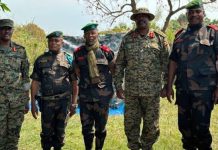
The FARDC suspects the Ugandan army of quietly enabling Thomas Lubanga’s new CRP militia in Ituri even as the two forces collaborate in the same province to hunt ADF jihadists. The contradiction sits at the heart of Congo’s most complicated military relationship.
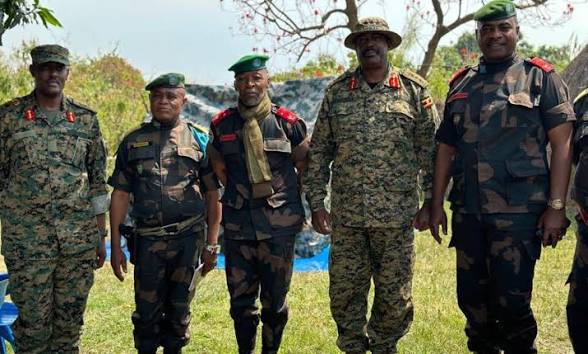
In Ituri Province, the Congolese Armed Forces are fighting on two fronts simultaneously and are increasingly suspicious of their partner’s loyalty on one of them. The FARDC is waging active operations against the Convention pour la Révolution Populaire (CRP), the militia launched in March 2025 by Thomas Lubanga, the ICC’s first-ever convict, while fighting side-by-side with Uganda’s UPDF against the ADF jihadists just kilometres away. The problem: security reports document a growing FARDC suspicion that the Ugandan army is not merely tolerating the CRP, but may be actively enabling it.
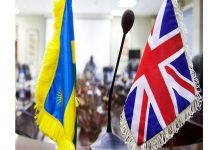
According to the Kivu Security Barometer’s February 2026 report, the FARDC has noted a “proximity observed” between UPDF units and CRP fighters in the Savo area, as well as deliberate Ugandan inaction during CRP attacks on Congolese army positions. The report describes the FARDC’s suspicions as a “recurring accusation” that adds a layer of geopolitical complexity to an already volatile conflict zone. The two armies maintain a formal joint operation, Operation Usujaa, successor to Operation Shujaa, against the ADF in Mambasa territory. But in Djugu, where the CRP operates, that partnership appears threadbare.
ALSO READ: Ituri Civil Society Demands UPDF Withdrawal, Issues Two-Week Ultimatum
Thomas Lubanga Dyilo, born in 1960 in Ituri, of the Hema-Gegere ethnic group, was the first person ever convicted by the International Criminal Court, found guilty in 2012 of conscripting and using child soldiers in the brutal Ituri conflict of the early 2000s. He served 14 years and walked free from Makala prison in Kinshasa in March 2020. President Tshisekedi, seeking to pacify Ituri, named him to a peace task force. That gamble did not pay off. In January 2025, the UN Panel of Experts accused Lubanga of supporting armed groups in Ituri and of having links to the M23 movement. By March 2025, as Goma and Bukavu fell to M23 and eastern Congo fractured, Lubanga announced the formation of the CRP and went back to war.
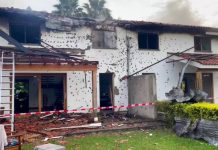
The CRP has since engaged the FARDC in repeated clashes across northern Ituri — particularly in Djugu territory, around Bule, Sanzi, and the area north of Bunia. A security report from February 2026 confirmed four major engagements during the month for control of Bule alone, a strategic locality the army lost in January and has not recovered despite sustained counter-offensives. The CRP has shown tactical resilience well beyond what early observers predicted.
“The CRP scrupulously avoids any hostile act towards UPDF units in Ituri. Lubanga even calls their presence ‘beneficial’. Meanwhile, the Ugandan military does not target his men, creating what appears to be a non-aggression pact.”— The Africa Report, September 2025
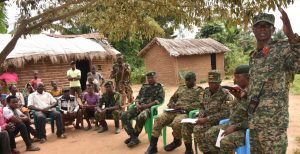
The evidence linking Uganda to Lubanga’s re-emergence is circumstantial but consistent. Lubanga spent time in Kampala after leaving Ituri in July 2024 and established his residence there. The UN Panel of Experts reported that he met in Kampala with Innocent Kaina alias India Queen, a sanctioned M23 commander, and helped recruit former UPC fighters for the Zaïre/ADCVI militia allied with M23, with training supervised by instructors from Ituri, Uganda, and Rwanda. Uganda denied involvement. Yet on the ground in Ituri, a documented pattern has emerged: the CRP does not attack UPDF positions, and the UPDF does not attack CRP fighters.
When The Africa Report interviewed Lubanga in September 2025, he acknowledged the anomaly but could not explain it. “I do not see why the Ugandans would attack us,” he said. He denied receiving Ugandan help, which the UN said he has. Asked about his apparent proxy relationship with Kampala, he called it a “coincidence” of timing: “We had been operational for several months. But you have to plan before firing the first shot.” Security analysts were less diplomatic. A diplomat in Kampala described Lubanga as projecting “far beyond the real strength of his movement” but confirmed that clashes with the FARDC had multiplied and that Uganda appeared, at minimum, comfortable with the CRP’s presence in its operational zone.
The American Enterprise Institute’s April 2025 analysis, drawing on UN and military reporting, put it directly: Uganda may have mobilised proxy networks to establish local military partners in eastern DRC separate from the FARDC. The CRP fits that profile: a Hema-based militia with historical ties to Uganda, led by a figure who spent years in Kampala, operating in Ituri, where Uganda has maintained a strategic interest since the Second Congo War, and where it has sometimes been accused of exploiting the joint ADF operation to consolidate influence.
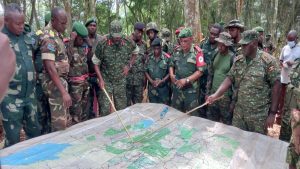
The FARDC-UPDF relationship has never been smooth. The UN Panel of Experts’ December 2024 report documented a pattern of friction: UPDF has conducted unilateral operations inside the DRC without FARDC coordination, refused to share intelligence, and failed to respect Congolese army checkpoints. UPDF has also transferred ADF ex-hostages and detainees to Uganda without promptly sharing information with Kinshasa, complicating Congolese judicial and intelligence processes. In response, the FARDC has delayed UPDF deployments and crucially hesitated to expand Operation Shujaa’s area of operations northward, “fearing a hidden agenda from Uganda tied to its historical interests in Ituri,” in the Panel’s words.
Those historical interests are not trivial. During the Second Congo War, Uganda was a primary backer of the UPC, the very predecessor militia of which Lubanga was president. The UPC was eventually forced out of Bunia by the Ugandan army in March 2003, but its networks, fighters, and ethnic affiliations endured in Ituri. The CRP draws on the same Hema community and the same pool of former UPC fighters. From Kinshasa’s perspective, the reappearance of a Lubanga-led militia based partly in Uganda, operating without friction with UPDF units, in a province where Uganda has long-standing mineral and strategic interests, does not look like a coincidence.
Uganda’s position in eastern Congo has long defied simple characterisation. It is formally allied with Kinshasa through Operation Usujaa. It has fought alongside FARDC against the ADF since 2021. Its troops were credited with helping stabilise parts of North Kivu and Ituri. At the same time, it has been accused at various points of enabling armed groups sympathetic to its strategic interests, of conducting unilateral operations without FARDC knowledge, and of allowing figures like Lubanga to operate from Kampala while claiming no knowledge of their activities.
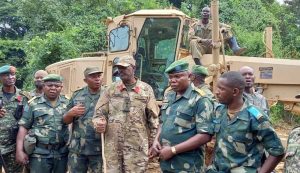
AEI’s analysis described Uganda’s posture as “friend to all, enemy to none,” a characterisation that applies not only to its diplomatic positioning between Kinshasa and Kigali, but to its apparent tolerance for multiple armed actors in Ituri simultaneously. The CRP’s consistent avoidance of UPDF positions and UPDF’s consistent non-engagement with the CRP does not prove Kampala’s hand. But it does suggest, at minimum, that Uganda has chosen to look the other way and that Kinshasa has noticed.
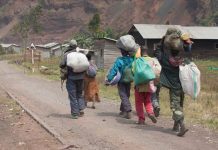
For the civilians of Djugu territory, already among the most conflict-affected populations in the DRC, caught between the CRP, CODECO, FARDC, and UPDF, the geopolitical complexity offers no comfort. The battle for Bule continues. The FARDC’s counter-offensive has not yet succeeded. And the army fighting to restore state authority in the province is doing so while entertaining deep doubts about the intentions of its own partner in the field.