
Historic Meeting in Kinshasa Signals New Era of Military Cooperation
KINSHASA, February 27 – The United States and the Democratic Republic of the Congo have taken a significant step towards deepening their security partnership, with senior American and Congolese officials meeting in Kinshasa this week to formalize plans for enhanced military cooperation, including intelligence sharing, training programs, and joint military exercises.
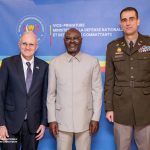
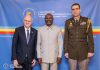
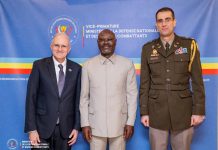
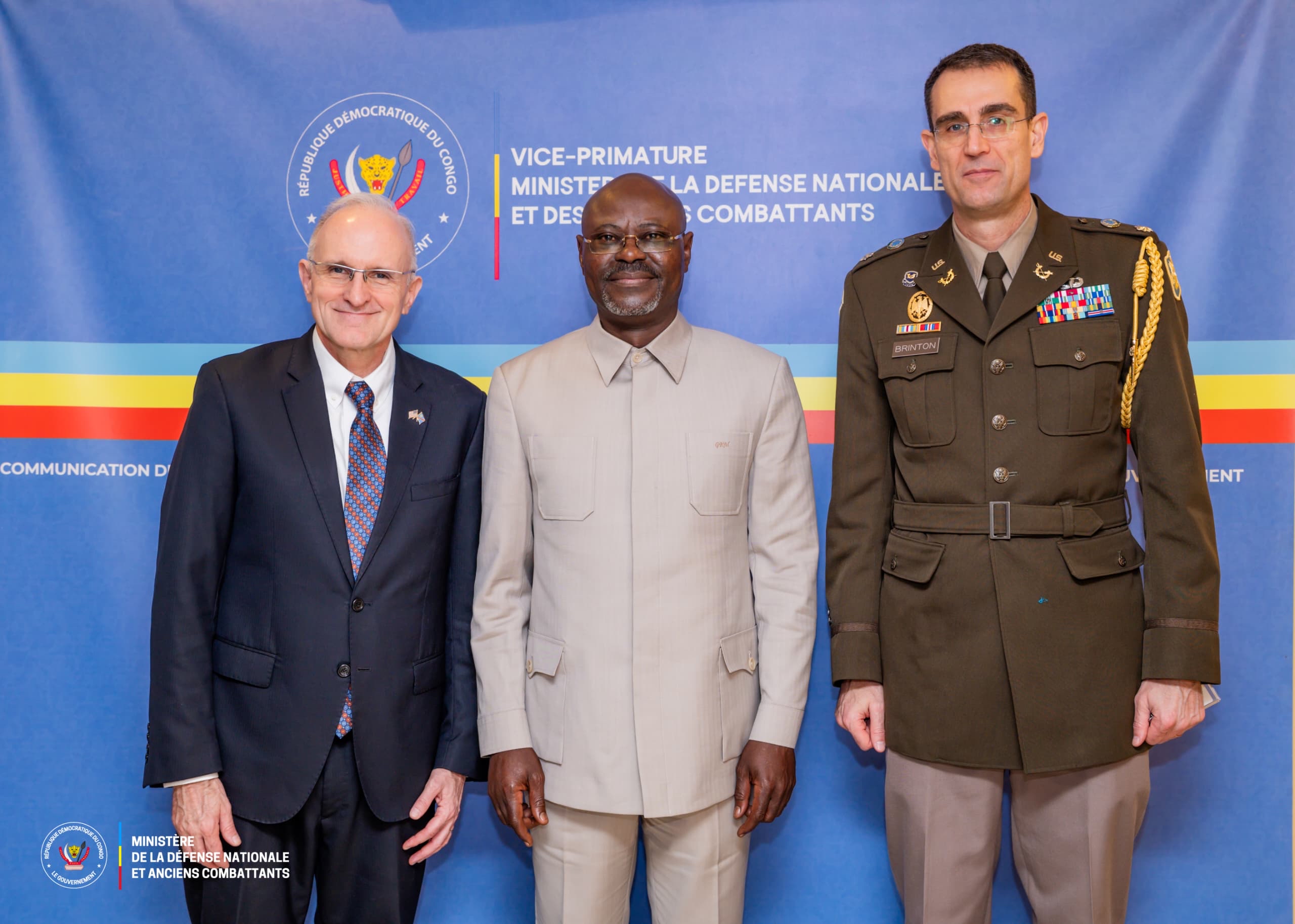
On February 26, US Chargé d’Affaires Ian J. McCary and Military Attaché Chad Brinton met with DRC Defense Minister Guy Kabombo Muadiamwita at the Defense Ministry in Kinshasa to discuss critical security, stability, and bilateral cooperation issues. The meeting resulted in concrete agreements to expand cooperation in the coming months, marking a pivotal moment in US-DRC military relations.
ALSO READ: Patrick Muyaya Speaks on FDLR, Rwanda Security, and Mineral War
According to sources familiar with the discussions, the two sides agreed to focus on three primary areas of cooperation: First, establishing robust mechanisms for sharing intelligence on security threats, including armed groups operating in eastern provinces and regional security challenges. Second, implement comprehensive training initiatives for FARDC (Armed Forces of the DRC) personnel, building on existing programs but with substantially greater scope and resources.
Third, conducting joint exercises in the coming months would mark a new chapter in practical military cooperation between the two nations. Such exercises would allow FARDC units to train alongside US forces, enhancing interoperability and professional standards.
“We discussed issues of security, stability, and bilateral cooperation,” a US Embassy spokesperson confirmed. “This meeting demonstrates the commitment of both nations to advancing our security partnership under the framework established in December 2025.”
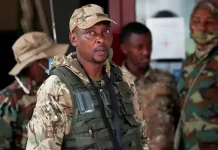
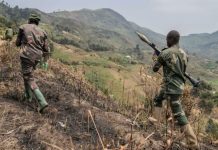
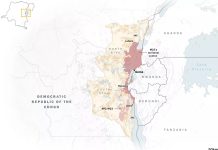
The timing of the agreement is significant. It comes as the DRC faces mounting security challenges in its eastern provinces, where the AFC/M23 rebel group has captured major cities, including Goma and Bukavu, and controls substantial territory. The recent death of M23 spokesperson Willy Ngoma in combat has not slowed the group’s military operations, with fighting continuing across North Kivu and South Kivu provinces.
Adding further weight to the security partnership, General Dagvin Anderson, commander of United States Africa Command (AFRICOM), was expected to meet with DRC President Félix Tshisekedi in Kinshasa on February 26, according to French investigative outlet Africa Intelligence.
The meeting, originally scheduled for late 2025 but rescheduled to early this year, signals the high-level commitment on both sides to deepening security cooperation. General Anderson had previously met with the Congolese foreign minister on the sidelines of the Munich Security Conference in Germany on February 15, laying the groundwork for this week’s developments.
An AFRICOM team led by Colonel Michael Gacheru had already visited Kinshasa in late January, meeting with FARDC Chief of Staff Lt. Gen. Jules Banza Mwilambwe and other senior military leaders to explore cooperation opportunities. This week’s agreements appear to represent the fruition of those exploratory discussions.
The agreements reached in Kinshasa this week represent a calculated bet by both governments.
For President Tshisekedi and the DRC, the bet is that enhanced US military cooperation can help build a more capable FARDC able to secure the Eastern provinces, AFC/ M23, and protect civilians without compromising sovereignty or creating dependency. It’s also a bet that the US partnership can be managed alongside relationships with other partners, including China, without being forced into a binary choice.
For the United States, the bet is that security cooperation can advance American interests in regional stability, critical mineral security, and counter-terrorism without being drawn into an open-ended commitment or facilitating human rights abuses. It’s a bet that the DRC can be a reliable partner despite its governance challenges and that working with imperfect partners is better than ceding influence to competitors.
As Colonel Gacheru said during the January AFRICOM visit, this is “the first positive step towards a long and successful journey together.” The keyword is “long.”
Building effective military capacity is not accomplished through a few training courses or intelligence briefings. It requires sustained commitment over years, patience through setbacks, and a willingness to adjust approaches based on results.
For the Congolese people living in the shadow of conflict in eastern provinces, what matters is not diplomatic announcements or military cooperation agreements, but tangible security improvements. Can they return to their homes? Can their children go to school without fear? Can they farm their fields without armed groups demanding taxes or worse?
The enhanced US-DRC security partnership announced this week creates potential pathways to those outcomes. But potential is not the same as reality. The test will be implemented to determine whether the intelligence is shared effectively, whether the training produces capable units that respect human rights, whether joint exercises build genuine capacity, and whether improved FARDC capabilities contribute to the protection of civilians rather than the perpetuation of conflict.
History offers reasons for both hope and skepticism. The coming months will reveal which is more justified.