



Dismantling the Rwanda-linked genocidal armed group commonly referred to as the Interahamwe, now largely associated with the Democratic Forces for the Liberation of Rwanda, appears increasingly difficult under the current regional security framework.
Despite the US-brokered agreement Washington Accords for Peace and Security, signed in December 2025, implementation efforts are showing signs of strain. They are increasingly doubtful following recent statements by Kinshasa officials.
The Minister of Communication and Media of the Democratic Republic of the Congo, Patrick Muyaya Katembwe, continues to suggest that the FDLR (Democratic Forces for the Liberation of Rwanda), a UN-sanctioned armed group, no longer poses a viable threat to Rwanda.
“Can the FDLR, who fled Rwanda in 1994, still pose a threat to the Rwandan regime 32 years later? No!” Muyaya stated.
ALSO READ: Guterres at the AU Summit: An Immediate Ceasefire and Respect for the DRC’s Territorial Integrity
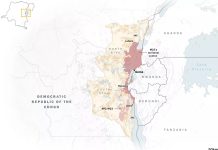
The Kinshasa regime’s spokesperson has also consistently accused Rwanda of backing the rebel coalition known as AFC/M23, which is fighting the current government and has taken control of key cities in eastern Democratic Republic of the Congo (DRC Goma and Bukavu.
Rwanda, however, firmly denies supporting the M23 and points to the FDLR’s presence and collaboration with FARDC as the root cause of the insecurity.
“Even today, Rwanda controls the parts of the country where the FDLR are located, but at the end of the peace process, it will claim that the threat remains,” added Muyaya.
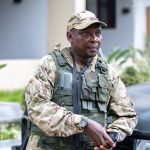
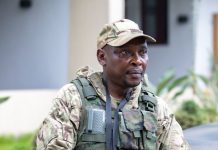
A lesser-known truth is that the Kinshasa regime works hand in hand with the FDLR, which seeks to overthrow the Kigali government by force, according to Lt. Col. (Rtd) Emelien Mpakaniye, a former FDLR fighter and mineral explorer who voluntarily surrendered and returned to Rwanda.
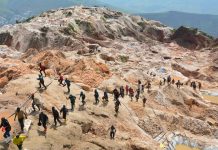
He explains that the Congolese government openly supports the group by supplying weapons, funding, and access to mineral mines.
He says, “The FDLR’s business activities in Congo sustain the group, enabling it to survive and acquire weapons, especially through dealings with mineral traders. The Congolese government also turns to them in times of need, supplying ammunition and, at times, financial support.”
A violation of the Washington Accords?
Muyaya’s comments appear to directly contradict the Washington Accords, where the key pillar of the agreement is the “Prohibition of Support for Hostile Acts or Armed Groups,” which forbids both nations from “supporting any military or other hostile activities against each other on or from their respective territories or providing support for such activities abroad.”
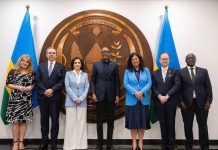
Sarah Troutman, U.S. Deputy Assistant Secretary of State for African Affairs, reaffirmed the U.S. position during a House Foreign Affairs Africa Subcommittee hearing on January 22, 2026.
“The FDLR is a legitimate threat. We are certainly not denying that. They cannot be allowed to operate in eastern [DR Congo],” Troutman told members of the House Subcommittee while addressing the House on Advancing Peace in DRC and Rwanda through President Trump’s Washington Accords.
“We are certainly emphasizing to the [Congolese] government that neutralising the FDLR, as they have committed under these agreements, is essential and we need to see more steps taken to do that.”
Meanwhile, Rwanda’s Foreign Affairs Minister, Olivier Nduhungirehe, remains unconvinced that the militia founded by remnants of the perpetrators of the 1994 Genocide against the Tutsi remains active with Kinshasa’s backing.
“The FDLR are indeed present and still supported by Kinshasa,” Nduhungirehe told RFI Afrique when addressing the long-standing security concerns on Rwanda’s border. “What we are asking for is that they be neutralized as required by the Washington peace agreement.”
The neutralization of the FDLR, a militia founded by the remnants of those responsible for the 1994 Genocide against the Tutsi, has been the cornerstone of Rwanda’s national security policy for over thirty years.
Kigali maintains that the group’s continued existence, bolstered by alleged logistical and military support from the Congolese Armed Forces (FARDC), represents an existential threat to the Rwandan state and its people.