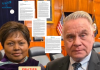
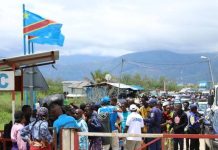
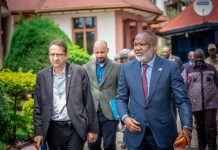
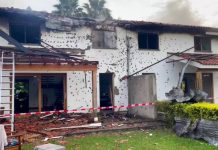
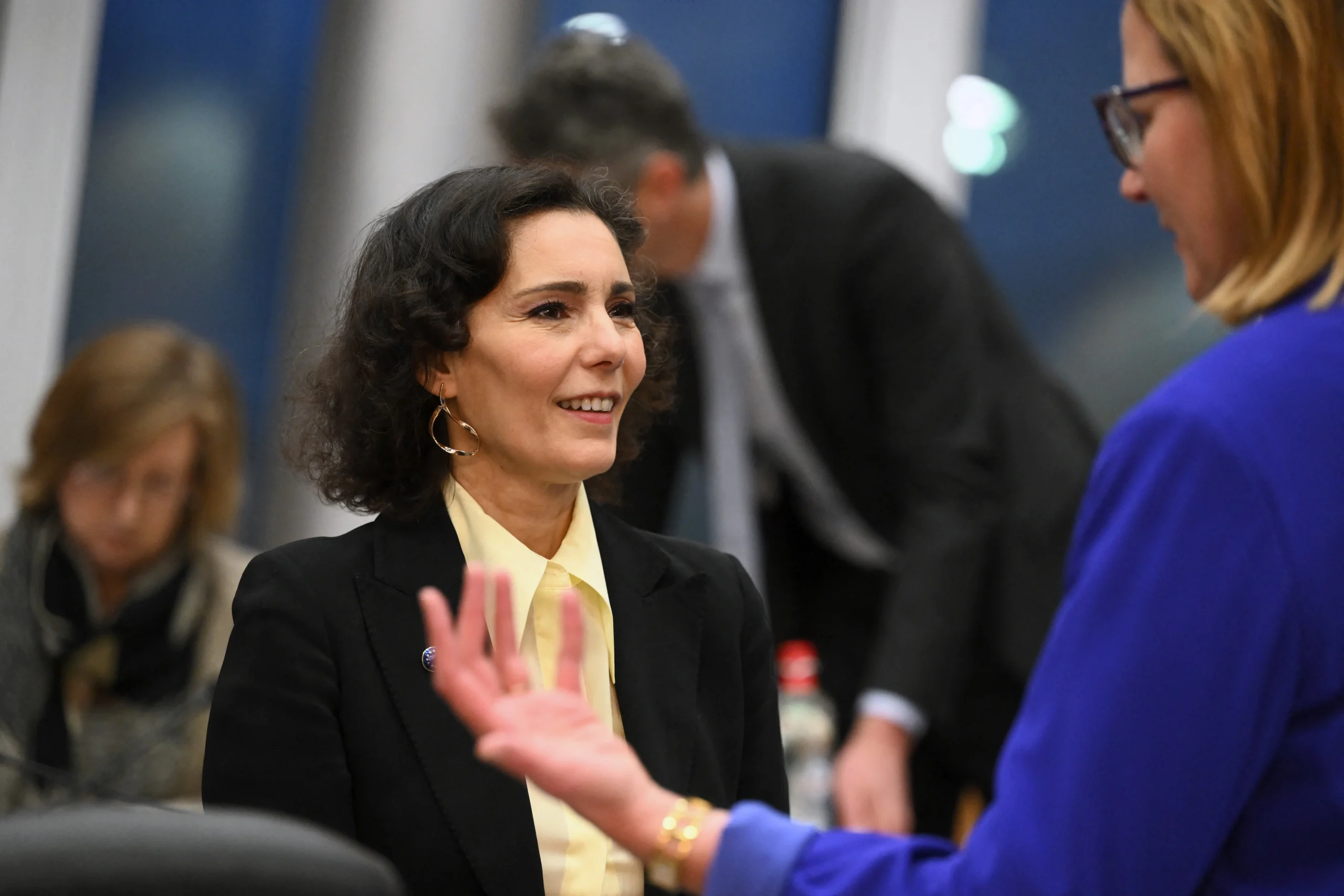
Kinshasa / Bujumbura / Kigali, 17 February 2026 — On the same day that the 39th African Union Summit was closing its doors in Addis Ababa, a high-level European Union delegation led by Commissioner for Equality, Preparedness and Crisis Management Hadja Lahbib touched down in Kinshasa, launching a landmark humanitarian and diplomatic mission across the Great Lakes region. The visit covering the Democratic Republic of Congo, Rwanda, and Burundi is one of the most significant expressions of European engagement with the eastern Congo crisis since the dramatic fall of Goma to the Rwanda-backed M23 rebel movement in late January 2026.
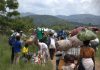
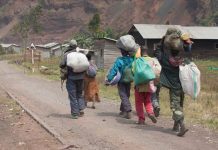
The timing of Lahbib’s visit is far from coincidental. Eastern DRC has descended into one of its most catastrophic phases in years. The escalation of conflict in eastern DRC is driving mass displacement, with food, water, and shelter stretched to breaking point, and women and children increasingly exposed to violence and exploitation. The humanitarian toll is staggering: more than 21 million people require humanitarian assistance, while violence in the eastern provinces continues to force families to flee repeatedly, often into overcrowded shelters or temporary camps. The crisis is compounded by widespread human rights violations, conflict-related sexual violence, and alarming food insecurity affecting nearly 28 million people.
At the start of 2026, the Congolese government and the humanitarian community jointly launched an emergency funding appeal of $1.4 billion. Without sufficient and rapid financing, assistance in 2026 would only be able to reach 7.3 million people out of nearly 15 million with vital needs. Lahbib’s visit is therefore as much a financial intervention as a political one.
A high-level EU delegation, led by Commissioner Hadja Lahbib, began this crucial visit to the Great Lakes region on Tuesday, 17 February 2026. The Commissioner’s journey began at the Panzi Clinic in Kinshasa, an institution founded by 2018 Nobel Peace Prize laureate Denis Mukwege, which provides free treatment to victims of sexual and gender-based violence. The choice of first stop was deliberate: it placed the human cost of the conflict and the particular suffering of women at the very centre of the EU’s message from the outset.
Lahbib arrived with an unambiguous mandate. The Commissioner clearly indicated that her primary objective in Kinshasa, and subsequently in Rwanda and Burundi, was to “negotiate humanitarian access and deliverables.” She intends to meet all parties involved in the conflict to deliver an unequivocal message on the necessity of opening secure corridors. On social media upon her arrival, she declared: “The urgency is absolute, with a dramatic humanitarian crisis. Lives must be saved.”
Lahbib outlined three concrete objectives for her meetings with the conflict parties. She intended to secure concrete commitments for the continuation of health services, including in areas under the control of armed groups, and to ease the suffering of hundreds of thousands of affected people. She also called for the opening of safe humanitarian corridors to allow aid workers unhindered access to populations cut off by the fighting.
In her public statement accompanying the mission, Lahbib said: “Civilians in eastern DR Congo are trapped between bullets and hunger. Families are fleeing, and survivors of violence are struggling to find even basic care.” She was equally direct about the obligations of the warring parties, warning that “international humanitarian law is not a buffet table you don’t pick and choose. It is a duty for all parties, and it must be fully respected.”
The Commissioner also underscored that the EU’s humanitarian funding alone, however significant, is insufficient without a political and diplomatic solution, and that she would therefore press for full and unrestricted access for humanitarian actors on the ground, pending the conclusion of a genuine peace agreement.
Coinciding with Lahbib’s field visit, the European Union announced the mobilisation of a substantial new funding package. The EU is mobilising €81.2 million in humanitarian aid across the Great Lakes region. Of this total, €68 million will fund humanitarian aid inside the DRC itself, providing food assistance, emergency health and nutrition care, access to water, sanitation, and basic shelter for displaced families, and protection services including care for survivors of violence and child protection.
A further €13.2 million will support the regional refugee response and strengthen disaster preparedness across the Great Lakes region, helping partners respond quickly to new displacement and emergencies linked to the crisis. This funding complements the €129.5 million the EU already allocated to the region in 2025, the bulk of which was directed at the DRC response.
Yet even this package is framed as a stopgap measure. The Belgian commissioner acknowledged that €250 million in EU humanitarian aid is insufficient without a political and diplomatic solution.
The scope of Lahbib’s mission deliberately extends beyond the DRC’s borders, reflecting the fundamentally regional nature of the crisis. Commissioner Lahbib is visiting the DRC, Burundi, and Rwanda to assess the most pressing humanitarian needs on the ground and to advocate for humanitarian access with all parties to the conflict in eastern DRC.
Burundi is facing severe strain from the spillover effects of the conflict. Recent escalations in neighbouring eastern DRC have triggered large cross-border movements, with tens of thousands of Congolese refugees arriving in Burundi since late 2025, putting additional pressure on already stretched resources, including camps, health services, and water systems. Lahbib plans to visit the largest camp for Congolese displaced persons in Burundi, in Bujumbura, which shelters more than 70,000 people.
The inclusion of Rwanda in the itinerary carries particular diplomatic weight. Kigali is widely accused by Kinshasa and a range of international observers of backing the M23 rebel movement, an allegation that Rwanda denies. By visiting all three capitals, Lahbib is engaging all sides directly, including the party whose actions many hold responsible for the catastrophe she is there to address.
This visit did not emerge in a vacuum. It follows the Foreign Affairs Council discussion on 29 January, where the Commissioner received full support from Member States for her mission, with a view to developing tangible humanitarian diplomacy initiatives. Belgium, France, Germany, the Netherlands, Portugal, Sweden, and Slovenia had all raised concerns about the worsening humanitarian crisis in eastern Congo at that council.
The visit also adds a dimension of humanitarian diplomacy to a broader European political discussion about the role of critical minerals in sustaining the conflict. Belgian Foreign Minister Prévot reiterated the need to revive the memorandum of understanding on critical raw materials between the EU and Congo, noting that access to minerals is one of the drivers of tensions between Kinshasa and Kigali.
Lahbib’s mission encapsulates the tension at the heart of the international response to the DRC crisis: the imperative to deliver immediate humanitarian relief while simultaneously pushing for the political settlement that alone can make that relief sustainable. The humanitarian crisis extends far beyond the borders of the DRC. Neighbouring countries like Burundi and Tanzania are absorbing the shockwaves of the conflict by hosting tens of thousands of Congolese refugees, underscoring the need for a coordinated regional approach.
For the millions of civilians caught between armed groups, displacement camps, and a catastrophically underfunded aid response, the EU Commissioner’s presence on the ground is a visible signal of international attention. Whether that attention translates into the sustained political pressure and humanitarian access that could meaningfully alleviate their suffering remains the central, urgent question of this mission.
Sources: European Commission / DG ECHO (17 February 2026).