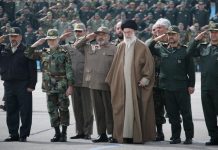
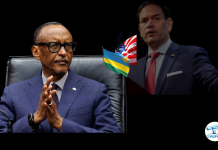

The two leaders at the heart of the eastern Congo conflict did not attend the 25th EAC Heads of State Summit in person, a conspicuous absence that deepens questions about the bloc’s ability to confront the crisis on its doorstep.
EAC/ ARUSHA — Rwanda’s President Paul Kagame and DRC’s President Félix Tshisekedi did not attend the 25th Ordinary Summit of the East African Community in person, EAC Secretary General Veronica Nduva confirmed on Friday, March 6. Both instead sent senior representatives to the gathering at the EAC Headquarters in Arusha, Tanzania, a pointed snub that lays bare the deep mistrust between the two leaders and casts a long shadow over the bloc’s most significant summit in over a year.
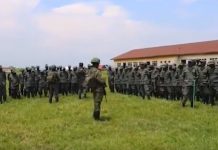
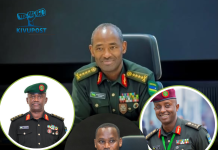
Their absence is no accident of scheduling. It comes just days after the United States imposed sweeping sanctions on Rwanda’s Defence Force and four of its top commanders for supporting the M23 rebel group in eastern Congo, the most direct American pressure on Kigali in a generation. With relations between Kinshasa and Kigali at their lowest point in years, neither leader appeared willing to share a room, even one convened in the name of regional unity.
ALSO READ: Somalia Extends President’s Term, Delays Elections
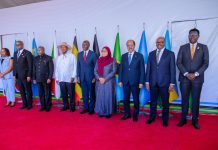
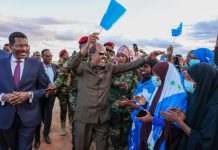
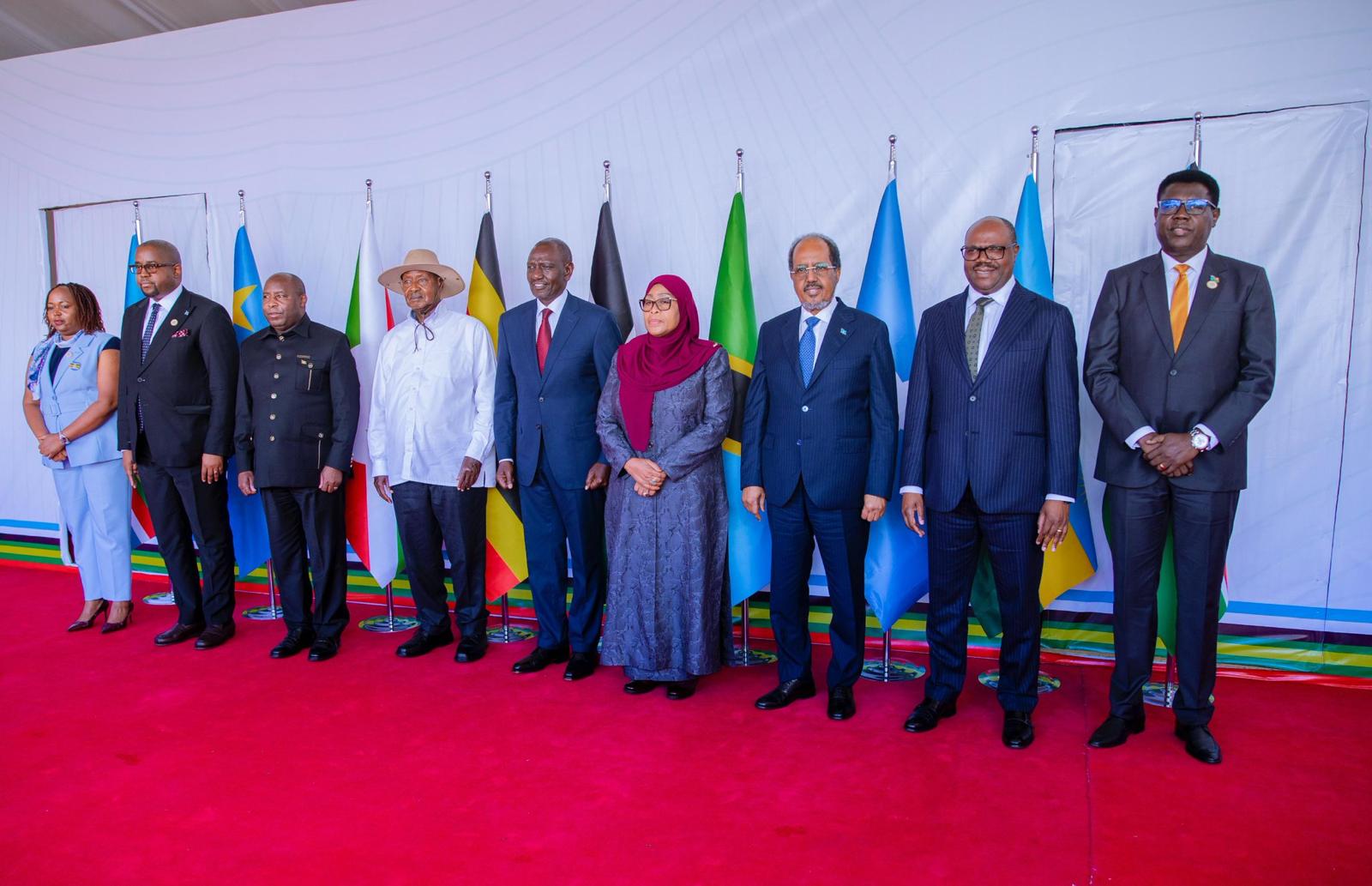
According to Secretary General Nduva, leaders confirmed to attend in person include Kenya’s President William Ruto, who chairs the summit as EAC Chairperson, Uganda’s President Yoweri Museveni, Burundi’s President Évariste Ndayishimiye, and Somalia’s President Hassan Sheikh Mohamud. The attendance of Tanzania’s President Samia Suluhu Hassan and South Sudan’s President Salva Kiir Mayardit was not immediately confirmed.
The absences of Kagame and Tshisekedi are the most consequential. These are the two leaders whose relationship and the war being fought in the name of both their countries define the EAC’s greatest current challenge. That they will not face each other across the summit table is a statement in itself.
Nduva tried to project calm, saying the bloc remains stable despite the tensions. “The community is really solid; it is not collapsing,” she told journalists, pointing to progress in trade facilitation and new tariff regimes. But her assurances rang somewhat hollow against a backdrop of financial paralysis, unresolved conflict, and a summit that the two most important protagonists chose to skip.
The double absence arrives at a moment when the EAC itself is in institutional crisis. The 25th Summit was originally scheduled for November 2025, then delayed again after several leaders, including Kagame and Tshisekedi, signalled they would not attend. The bloc has not held a formal Heads of State summit in over a year, in direct violation of its own Treaty, which requires leaders to convene at least annually.
The financial picture is equally grim. As of January 31, 2026, member states owed the EAC a combined $89.3 million in unpaid contributions. The DRC, the very country whose crisis dominates the regional agenda, leads all debtors with $27 million in arrears. Burundi owes $22.7 million, South Sudan $21.8 million, Somalia $10.5 million, Rwanda $5.2 million, and Uganda $1.1 million. Only Kenya and Tanzania have paid their full annual share of $7 million. The funding shortfall has paralysed the East African Legislative Assembly, left over 150 Secretariat staff without salaries for more than three months, and stalled more than 260 cases before the East African Court of Justice.
Despite the political turbulence, the summit’s official agenda carries genuinely significant items. Leaders are expected to launch the EAC Customs Bond. This unified regional customs guarantee would replace the patchwork of national bond traders currently needed at each border crossing, and would formally adopt the 7th EAC Development Strategy (2026/27–2030/31), a five-year blueprint aligned with the African Union’s Agenda 2063 and the UN Sustainable Development Goals. Leaders will also appoint a new EAC Secretary General to replace Nduva, whose tenure ends this year, and designate new judges to the East African Court of Justice.
On financing, President Ruto is pushing for a revised contribution formula, a 65 percent equal share, 35 percent GDP-assessed, which would have Kenya paying $12.1 million annually and introduce sanctions for non-payers. Whether that reform can pass in a summit where two of the bloc’s most consequential members are represented only by envoys remains an open question.
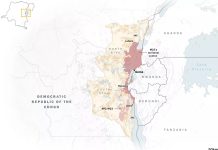
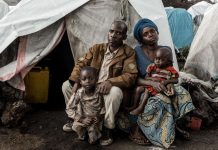
For the people of North and South Kivu, the absence of Kagame and Tshisekedi from Arusha is another signal, if any more were needed, that the leaders most responsible for their suffering are not yet ready for the kind of direct, face-to-face engagement that peace requires. The EAC has already been through the Nairobi Process, a joint regional force, and multiple ceasefire frameworks, all of which ultimately failed to hold. The Washington Accords, hailed as a breakthrough last December, collapsed within days when M23 captured Uvira. U.S. sanctions on the RDF followed within weeks.
A separate quadripartite summit involving Rwanda, the DRC, Uganda, and Burundi is being prepared under African Union facilitation, a parallel track that may prove more relevant to the war in the Kivus than anything decided in Arusha on Saturday. But that process, too, remains in its early stages.
The EAC’s theme for this summit is “Deepening Integration for Improved Livelihoods of EAC Citizens.” For the citizens of eastern DRC, deepening integration begins with the two men who chose not to show up.