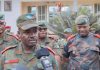
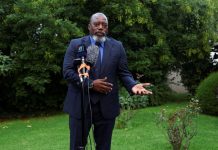


AFC/M23 Deputy Coordinator Bertrand Bisimwa has criticized the Democratic Republic of Congo’s mining deal with the United States, calling it “a desperate attempt at survival.”
Bisimwa was responding to reports being circulated across various media outlets and social media that the Congolese government has included the rebel-held Rubaya coltan mine in a strategic minerals shortlist presented to Washington under a U.S.–DRC cooperation framework.
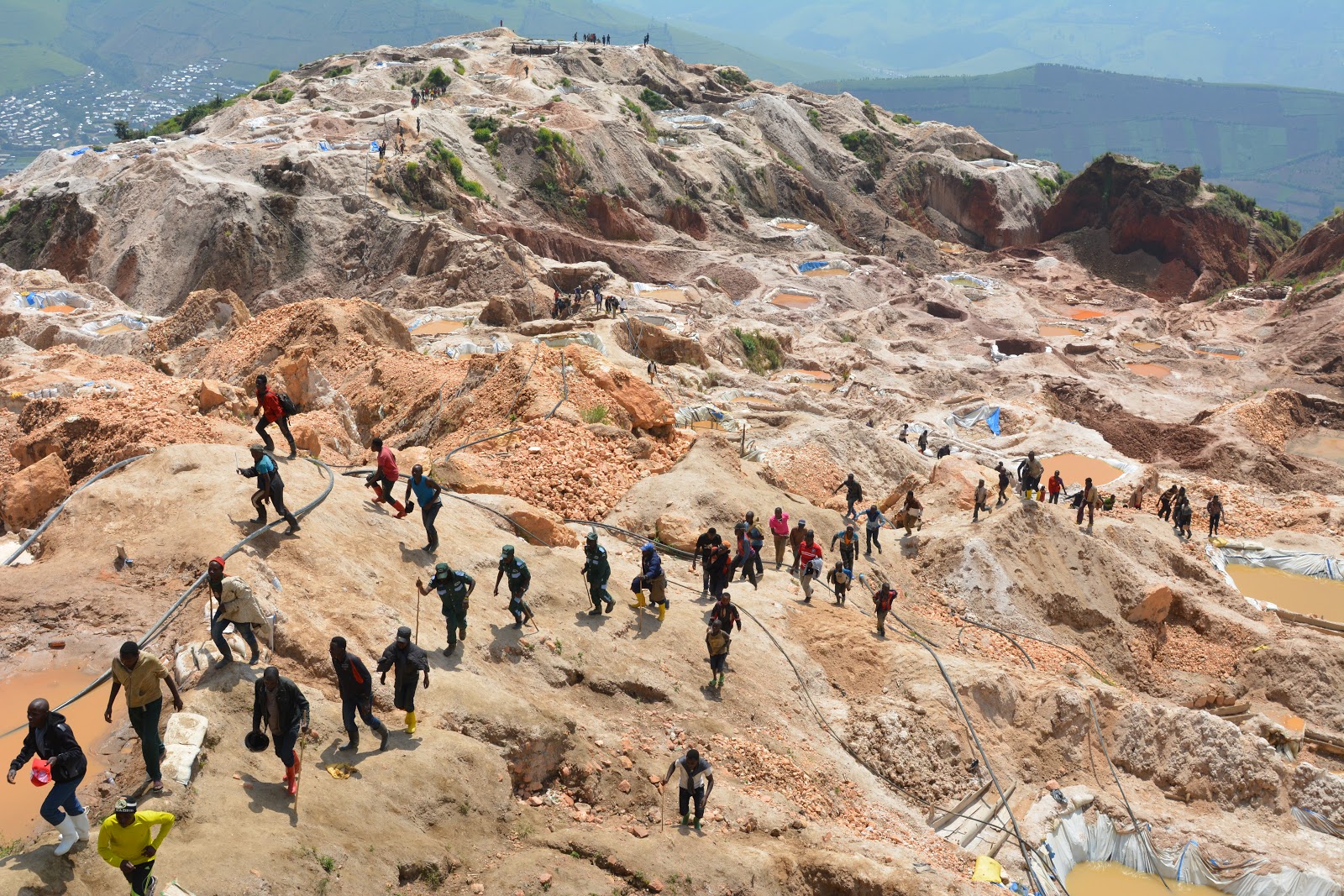
The Rubaya mining site, one of the world’s richest tantalum deposits, is located in Masisi territory, North Kivu province, an area currently controlled by the M23 armed group.
ALSO READ: How AFC/M23’s Conflict Corridors Reshape Trade, Livelihoods, and Power in Eastern DRC
In a post on X, Bisimwa said, “With the so-called strategic minerals, Kinshasa harbors the illusion of possessing a fearsome weapon, a ‘Sesame, open yourself’ to bring the world’s powers to heel.”
“Selling in public an asset over which one has neither possession nor control is a desperate attempt at survival,” added the AFC/M23’s deputy coordinator.
According to a Reuters report, a senior Congolese official and a U.S. diplomat confirmed that Rubaya is now included on a shortlist presented after a DRC–U.S. meeting held in Washington on February 5 aimed at advancing a strategic mineral partnership agreed in December.
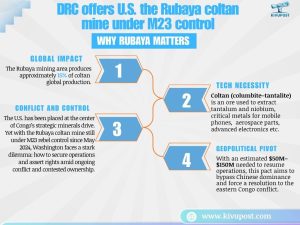
Reports also indicate that the Congolese government estimates that restarting and scaling up commercial production at Rubaya would require between $50 million and $150 million, with rapid cost recovery projected due to strong global demand for tantalum, Reuters reported, citing a government document.
Political analysts argue that Washington’s push reflects a broader strategy to challenge China’s decades-long dominance in Africa, especially in Congo’s mining industry.
The development comes amid broader diplomatic efforts. DR Congo recently signed bilateral economic agreements with the United States and Rwanda as part of the Washington Accords for Peace and Prosperity, signed on December 4.
The Rwanda–DR Congo bilateral agreement, formally known as the Regional Economic Integration Framework (REIF), covers cooperation in mining, infrastructure, energy, industrial development, agribusiness, public health, and national park management.