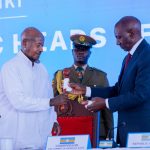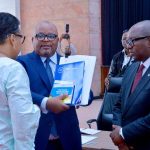




Uganda’s veteran president assumes the bloc’s rotating chairmanship for a one-year term, pledging deeper integration and larger markets. Rwanda is named rapporteur. A Tanzanian diplomat is appointed the new EAC Secretary General.
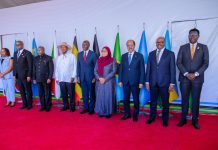
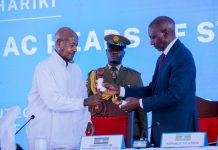
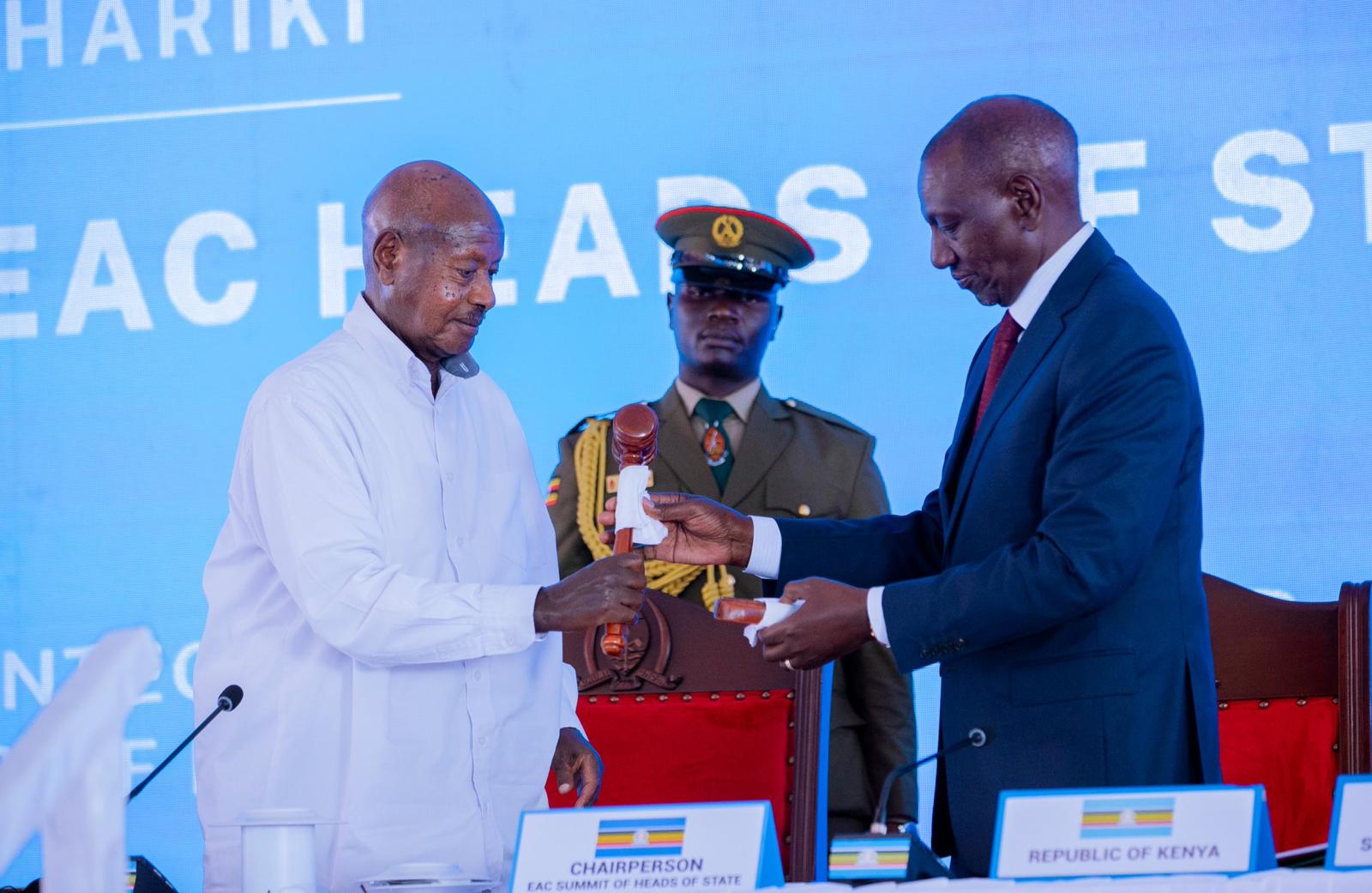
EAC/ ARUSHA — Uganda’s President Yoweri Kaguta Museveni assumed the chairmanship of the East African Community on Saturday, taking the mantle from Kenya’s President William Ruto at the conclusion of the 25th Ordinary EAC Summit of Heads of State at the Arusha International Conference Centre in Tanzania. Museveni will serve a one-year term, from March 2026 to March 2027, steering a bloc of over 300 million people that is simultaneously navigating a severe financial crisis, unresolved conflict in eastern DRC, and an ambitious integration agenda.
ALSO READ: Kagame and Tshisekedi Skip EAC Summit, Send Envoys to Arusha
In his outgoing remarks, President Ruto reflected on a 15-month tenure that he said was marked by significant progress on regional trade. He noted that intra-EAC trade rose by nearly 22 percent during his chairmanship, climbing from $33 billion in 2024 to $40.3 billion in 2025. Exports from the region grew by 32 percent to $19.6 billion, while the bloc’s trade deficit narrowed sharply from $3.4 billion to $1 billion.
“As I hand over the chairmanship of the EAC Summit, I take this opportunity to register my sincere appreciation to all members of the Summit of the EAC Heads of State, and the cooperation extended to the Republic of Kenya and to me since November 30, 2024, when I assumed the position as Chair of the EAC,” Ruto said. He also noted that the African Union had now taken the lead role in efforts to restore peace and security in eastern DRC, and congratulated his successor.
Accepting the chairmanship, Museveni thanked Ruto for steering the community and pledged to continue building on the bloc’s foundations. “I thank President William Ruto for steering the community over the last year and for the work done to strengthen our regional cooperation,” Museveni said. He added that he would work with all partner states to advance political, economic, and social cooperation within the EAC.
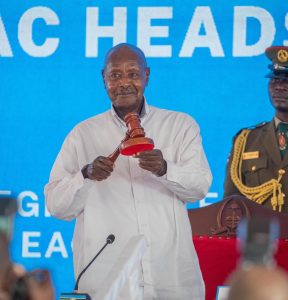
In his first address as EAC Chairperson, Museveni cast the chairmanship in sweeping historical terms, arguing that Africa has largely achieved political independence but still faces the unfinished challenge of economic unity. He emphasised that fragmented markets across the continent were holding back economic transformation, and called on the region’s leaders and youth to stay focused on the long-term mission of integration and development.
Drawing on examples from China, India, and South Korea, Museveni argued that large internal markets are essential to industrialisation and job creation. He challenged the summit on the practical implications of fragmentation. “If we do not create a big and reliable market for our wealth creators, how do businesses expand to produce more products, create more jobs, and pay more taxes?” he asked, calling for deeper intra-regional trade.
Museveni’s priorities as chair are expected to include the deepening of the EAC Common Market, accelerating cross-border infrastructure, notably the standard gauge railway, whose construction in Kisumu is expected to be formally launched with Ruto, and strengthening economic cooperation across all eight partner states.
Key Outcomes of the 25th Summit
Beyond the leadership transition, the 25th Summit produced a number of significant decisions that will shape the bloc’s direction over the coming years.
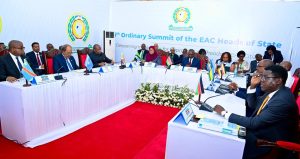
New Secretary General. The summit approved the appointment of Ambassador Stephen Patrick Mbundi of Tanzania as the new EAC Secretary General for a five-year term running to 2031. Mbundi succeeds Kenya’s Veronica Nduva and brings extensive experience in regional integration, having previously served as Permanent Secretary in charge of EAC Affairs at Tanzania’s Ministry of Foreign Affairs. His appointment notably breaks with what would have been the traditional rotation to South Sudan, a decision the summit made in part due to South Sudan’s poor record of contributions to the bloc.
New Financing Model. Faced with $89.3 million in outstanding member state arrears that had paralysed the Secretariat, leaving over 150 staff without salaries and suspending EALA sittings, the summit adopted a new equity-based funding model. Contributions will now be split 65 percent equally among member states and 35 percent based on assessed GDP, replacing the flat equal-contribution system. Defaulting states will have their arrears waived by 50 percent, on condition that they pay the remainder within two years. Kenya will now contribute approximately $12.1 million annually.
EAC Customs Bond Launch. Leaders formally launched the EAC Customs Bond, a single regional customs guarantee replacing the patchwork of national transit bonds. The reform aims to lower costs and cut border delays for traders moving goods across the eight partner states.
7th Development Strategy Launched. The summit formally launched the 7th EAC Development Strategy (2026/27–2030/31), setting the bloc’s development blueprint for the next five years, aligned with EAC Vision 2050 and the African Union’s Agenda 2063.
Judicial Appointments. The summit also marked the swearing-in of newly appointed judges to the East African Court of Justice, restoring the court’s capacity after a period of operational disruption due to funding shortfalls.
Rwanda as Rapporteur — and What It Means for the DRC
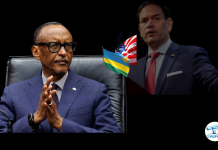
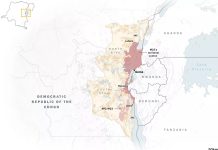
In an arrangement that will not go unnoticed in Kinshasa and the Kivus, Rwanda has been appointed as the EAC’s rapporteur, the member state responsible for documenting summit discussions and coordinating follow-up actions among partner states. The role places Kigali at the administrative centre of the bloc’s proceedings for the coming year, even as it remains under U.S. sanctions for its military support for M23 in eastern DRC.
Neither President Kagame nor President Tshisekedi attended the summit in person; both sent senior envoys instead, and the DRC remains the bloc’s largest debtor, owing $27 million in unpaid contributions. Yet the EAC’s formal agenda on eastern DRC continued. President Ruto, in his closing remarks, noted that the African peace process for eastern Congo is now fully under AU leadership, signalling a shift away from the EAC-led Nairobi Process that defined the previous two years of regional diplomacy.
For Museveni, the chairmanship arrives at a moment when Uganda’s own regional positioning is delicate. Kampala has troops in eastern DRC under a bilateral agreement with Kinshasa, primarily targeting the Allied Democratic Forces (ADF), a separate armed group with no connection to M23. Uganda has also been a consistent voice for African-led solutions to the DRC crisis, and hosted a regional summit in Entebbe late last year that called for EAC and SADC to take the lead on peace efforts. As EAC chair, Museveni will be expected to translate those positions into concrete action.
What Museveni’s Chairmanship Means for the Region
At 81, Yoweri Museveni is by far the longest-serving head of state in the EAC, having governed Uganda continuously since 1986. His chairmanship brings the authority of seniority and deep familiarity with the bloc’s history and contradictions. But it also comes with baggage: Uganda is itself among the states with outstanding contributions, owing $1.1 million, and Kampala’s regional relationships are complex, warm with Kigali, cooperative but sometimes tense with Kinshasa.
The summit’s decisions on the new financing model, the appointment of a Tanzanian Secretary General, and the launch of the Customs Bond suggest a bloc trying to stabilise itself institutionally after a bruising period of dysfunction. Whether Museveni’s chairmanship can consolidate those gains, and whether the EAC can play a meaningful role in addressing the crisis that affects its most troubled member state, will be the defining questions of the year ahead.