








The Eastern Democratic Republic of Congo holds some of Africa’s most spectacular natural wonders: emerald waters of Lake Kivu stretching 2,700 square kilometers, mountain gorillas in misty rainforests, active volcanoes glowing red at night, the world’s tenth-largest inland island. Yet while neighboring Rwanda markets these same assets to tens of thousands of tourists annually, North and South Kivu remain among Africa’s least-visited destinations. This is the story of what exists, what’s possible, and what stands between potential and reality.
LAKE KIVU: Africa’s Most Underrated Great Lake
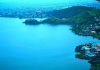
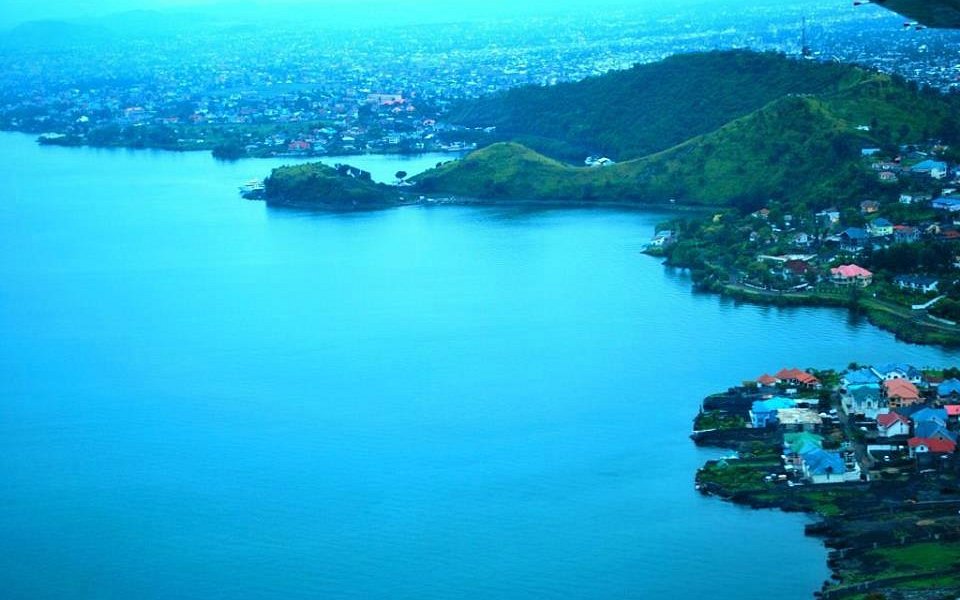
Lake Kivu, shared between Rwanda (42%) and the Democratic Republic of Congo (58%), is Africa’s sixth-largest lake, covering 2,700 km² with emerald-green waters surrounded by mountains. At depths reaching 475 meters, it’s Africa’s third-deepest Great Lake.
What makes Lake Kivu unique among African Great Lakes: it’s safe for swimming—no hippos, no Nile crocodiles, no bilharzia. The crystal-clear waters are perfectly swimmable, kayakable, and ideal for water sports that would be dangerous on Lakes Victoria, Tanganyika, or Malawi.
The Congolese Shore: Goma to Bukavu
The DRC controls approximately 1,370 km² of Lake Kivu’s surface, with major towns including Goma (North Kivu) and Bukavu (South Kivu). The journey between these cities—either by scenic 3-4 hour ferry ride or overland route—offers continuously stunning vistas of lake, mountains, and terraced hillsides.
Goma: A lakeside city of 782,000 residents, Goma sits directly on the border with Rwanda, with Lake Kivu as its western boundary and the Virunga volcanic range as dramatic backdrop. Colonial-era architecture mixes with modern development. The waterfront features hotels, restaurants, and bars where you can watch fishing boats at dawn and dusk while fishermen sing in unison as they paddle.
Bukavu: Built on peninsulas extending into the southern part of Lake Kivu, Bukavu’s geography creates one of the most picturesque urban settings in Central Africa. The city cascades down hillsides to meet the water, with views across to Rwanda’s shores. Markets buzz with activity, and the waterfront promenade offers spectacular lake views.
Activities on Lake Kivu (DRC Side)
Ferry crossings: The Bukavu-Goma ferry operates four times daily, taking 3-4 hours. At $50 per ticket (with luggage allowance), travelers experience stunning lake views, pass fishing villages, and observe daily life on Africa’s Great Lakes. A chicken sandwich and juice come included—and yes, there’s an old TV playing even older movies, making it simultaneously authentic and charming.
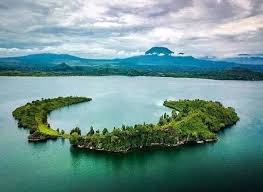
Boat tours and island exploration: Lake Kivu contains numerous islands, including Idjwi Island—the world’s tenth-largest island in a lake and second-largest in Africa. Idjwi, entirely within DRC territory, offers hiking, traditional village experiences, agricultural landscapes, and peaceful isolation from urban centers. Local tour operators arrange day trips or overnight stays.
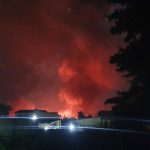
Water sports: Kayaking, swimming, paddleboarding, and fishing are all possible in Lake Kivu’s safe waters. Tchegera Island Camp (near Goma) offers kayaking experiences with volcanic mountains as backdrop—Nyiragongo and Nyamulagira volcanoes turn the night sky red with their glowing lava, creating unforgettable evening atmospheres.
Sport fishing: Lake Kivu hosts numerous tilapia species—long-fin tilapia, Nile tilapia, blue-spotted tilapia, redbreast tilapia—making it excellent for sport fishing. Local fishermen use traditional methods that tourists can observe or participate in.
Birdwatching: The lake and surrounding wetlands attract diverse bird species including African kingfisher, yellow-billed stork, speckled pigeons, ashy flycatcher, sacred ibis, and knob-billed duck.
Accommodation Options
Goma and Bukavu offer lodging for all budgets:
- Budget: $40-90/night for basic but clean accommodations
- Mid-range: $100-200/night (Coco Lodge Bukavu, various lakefront hotels)
- Luxury: $200-400/night (L’Orchids Safari Club, premium lakeside resorts)
Tchegera Island Camp near Goma provides tented luxury accommodation on a private island—one of eastern DRC’s most unique stays.
VIRUNGA NATIONAL PARK: Africa’s Oldest National Park
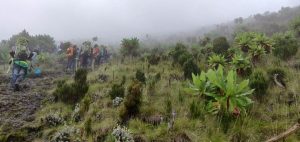
Established in 1925, Virunga National Park is Africa’s oldest national park and a UNESCO World Heritage Site. Covering 7,800 km² in North Kivu, Virunga contains:
Mountain Gorillas
Virunga hosts approximately one-third of the world’s remaining mountain gorillas (around 300 individuals). Gorilla trekking permits cost significantly less than in Rwanda ($400 vs Rwanda’s $1,500), offering the same extraordinary experience of sitting meters from habituated gorilla families as they feed, play, and interact.
However, gorilla trekking in Virunga frequently closes due to security concerns, making availability unreliable compared to Rwanda’s Volcanoes National Park.
Chimpanzees
Virunga contains habituated chimpanzee communities in the Tongo Forest. Chimpanzee tracking offers opportunities to observe our closest relatives in their natural habitat—a complement to gorilla experiences.
Nyiragongo Volcano
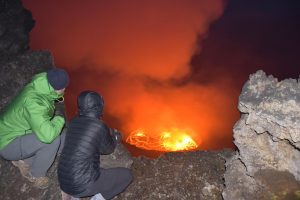
This is Virunga’s iconic experience: hiking to the summit of one of the world’s most active volcanoes to spend the night overlooking the world’s largest lava lake.
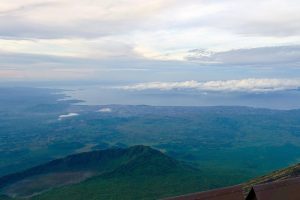
The Nyiragongo trek (typically 2 days/1 night) involves:
- 5-6 hour ascent through rainforest and volcanic terrain
- Summit camp at 3,470 meters elevation
- Night spent watching the glowing lava lake—a churning, bright orange-red pool of molten rock illuminating the crater
- Sunrise over the Virunga volcanoes and Lake Kivu
- Descent the following morning
This experience is genuinely world-class and unavailable elsewhere. The lava lake’s hypnotic glow, the alpine environment, and the raw power of active vulcanism create unforgettable memories.
Cost: Approximately $300-400 for permits and guide services
Challenge: Like gorilla trekking, Nyiragongo frequently closes due to volcanic activity or security concerns.
Accommodation
Virunga operates high-quality tented camps:
- Bukima Tented Camp (gorilla sector)
- Kibumba Tented Camp (gorilla/Nyiragongo sector)
- Mikeno Lodge (luxury option, $200-400/night)
- Tchegera Island Camp (Lake Kivu)
- Lulimbi Tented Camp
KAHUZI-BIÉGA NATIONAL PARK: Land of Eastern Lowland Gorillas
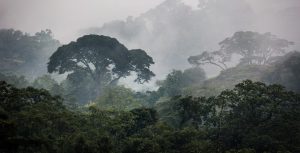
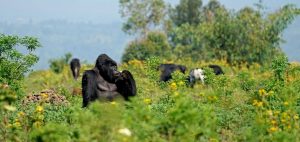
Located in South Kivu near Bukavu, Kahuzi-Biéga National Park (6,000 km²) is a UNESCO World Heritage Site protecting one of the last populations of Eastern Lowland Gorillas (Grauer’s gorillas).
What Makes It Unique
Eastern Lowland Gorillas are the world’s largest primates—substantially bigger than mountain gorillas. Only about 3,800 remain in the wild, making encounters extraordinarily rare. Kahuzi-Biéga offers one of the only places on Earth to trek them.
Gorilla permit: $400 (significantly cheaper than Rwanda or Uganda mountain gorilla permits)
The experience: Often, tourists have these encounters entirely to themselves—no crowds, no queues. One visitor review noted: “we went to Kahuzi Biéga Park, there were no tourists. It was a unique experience.”
This exclusivity—while partly reflecting security challenges—also means intimate wildlife encounters impossible in more popular parks.
Other Wildlife
The park hosts forest elephants, chimpanzees, over 350 bird species, and diverse primates. The montane and lowland rainforest ecosystems support extraordinary biodiversity.
The Two Peaks
Mount Kahuzi (3,308m) and Mount Biéga (2,790m) dominate the landscape, offering challenging hikes for adventurous trekkers.
MASISI REGION: Agricultural Beauty and Rural Tourism
The Masisi territory northwest of Goma offers a completely different tourism experience—agricultural landscapes, rural villages, traditional culture, and stunning mountain scenery.
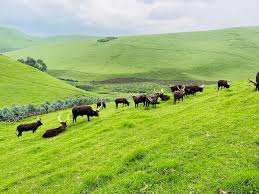
Tour operators like Kivu Travel arrange visits where tourists can:
- Hike through terraced hillsides
- Visit traditional villages
- Participate in agricultural activities (milking cows, cheese-making)
- Explore coffee farms
- Experience genuine rural Congolese hospitality
One visitor described it as “more beautiful than the pictures I had seen,” with “charming” accommodations and spectacular scenery.
This represents agro-tourism potential—connecting visitors with rural communities and agricultural traditions while providing income to farmers.
CULTURAL ATTRACTIONS IN GOMA AND BUKAVU
Foyer Culturel de Goma
North Kivu’s premier cultural center, offering:
- Arts training (music, dance, theater, cinema)
- Sanaa Weekend performances (3,000-5,000 attendees every Saturday)
- Professional ensembles like the Kivu Fanfare
- Connection to the annual Amani Festival
Visitors can attend performances, take classes, or simply experience Goma’s vibrant cultural scene.
Markets and Urban Exploration
Both Goma and Bukavu feature bustling markets selling textiles, crafts, fresh produce, and local artisan goods. The blend of Congolese cultures—12 distinct ethnic groups in North Kivu alone—creates rich craft traditions and cultural diversity.
Historical Sites
Colonial-era architecture, volcanic impact zones from Goma’s 2002 eruption, and cultural institutions document the region’s complex history.
Panzi Hospital (Bukavu)
Founded by Nobel Peace Prize laureate Dr. Denis Mukwege, Panzi Hospital’s work treating survivors of sexual violence has international significance. Some ethical tourism operators include educational visits (with appropriate sensitivity) to learn about the hospital’s humanitarian impact.
WHAT CURRENTLY EXISTS FOR TOURISTS
Despite security challenges, tourism infrastructure does function in North and South Kivu:
Tour Operators
- Kivu Travel: Highly-rated operator organizing gorilla treks, volcano climbs, Lake Kivu tours, and rural experiences
- Virunga National Park authorities: Professional operation with international booking systems
- Various local guides and agencies: Arrange specific activities
Positive Visitor Experiences
TripAdvisor and travel forums contain numerous positive reviews from tourists who visited North/South Kivu in 2022-2024:
“our program made by Kivu Travel was perfect…our great guide/driver, Yves, accompanied us throughout this stay, telling us anecdotes and the history of his country. we also spent 24 hours south Kivu in Congo to go see the gorillas, at Kahuzi Biega Park, there were no tourists. it was a unique experience”
“I can’t say enough about how great my trip was…the drive was comfortable, the scenery spectacular, and the services top notch. My accommodations were so charming I couldn’t believe it and the Masisi is actually more beautiful than the pictures I had seen”
These reviews share common themes:
- Exceptional natural beauty
- Professional local operators
- Lack of crowds (exclusive experiences)
- Value for money
- Regret that security concerns prevent more tourism
What Works Well
When security permits, visitors report:
- High-quality guiding and local expertise
- Well-maintained parks and facilities (where operational)
- Genuine Congolese hospitality
- Affordable pricing compared to neighboring countries
- Unique experiences unavailable elsewhere
The Treasure Few See
Eastern DRC possesses tourism assets that would be globally famous if located almost anywhere else: active volcanoes with lava lakes, rare gorillas in misty rainforests, pristine Great Lake waters safe for swimming, stunning mountain landscapes, vibrant cultural traditions.
Yet these treasures remain largely unseen, locked behind security challenges and decades of negative perceptions.
The tragedy is not just unrealized economic potential—though that matters enormously to communities that desperately need alternative livelihoods. The deeper tragedy is that one of Africa’s most spectacular regions remains inaccessible to the world, its beauty unappreciated, its stories untold.
Those few adventurous travelers who do visit invariably express the same sentiment: “This is incredible. Why isn’t this better known? What a shame more people can’t experience this.”
The answer, ultimately, comes back to peace. Tourism potential exists. Natural assets exist. Cultural richness exists. Local capacity exists. What doesn’t exist is the sustained security that would allow systematic tourism development.
Until that changes, Lake Kivu will remain underappreciated, Virunga will operate far below capacity, Kahuzi-Biéga’s gorillas will encounter almost no visitors, and Goma and Bukavu will remain unknown to travelers who would love their dramatic beauty.
The jewel waits to shine. It needs only the peace that would let the world finally see it.
KIVUPOST.COM is committed to showcasing the beauty, culture, and tourism potential of eastern DRC alongside our reporting on challenges. Our region deserves to be known for more than conflict. These natural wonders, cultural treasures, and community initiatives exist and deserve recognition.
We call on all stakeholders—government, armed groups, international actors—to prioritize the peace that would unlock these extraordinary tourism assets for the benefit of all.