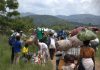
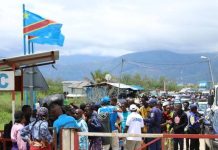
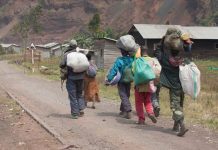
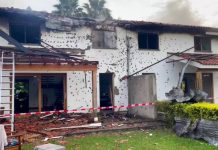

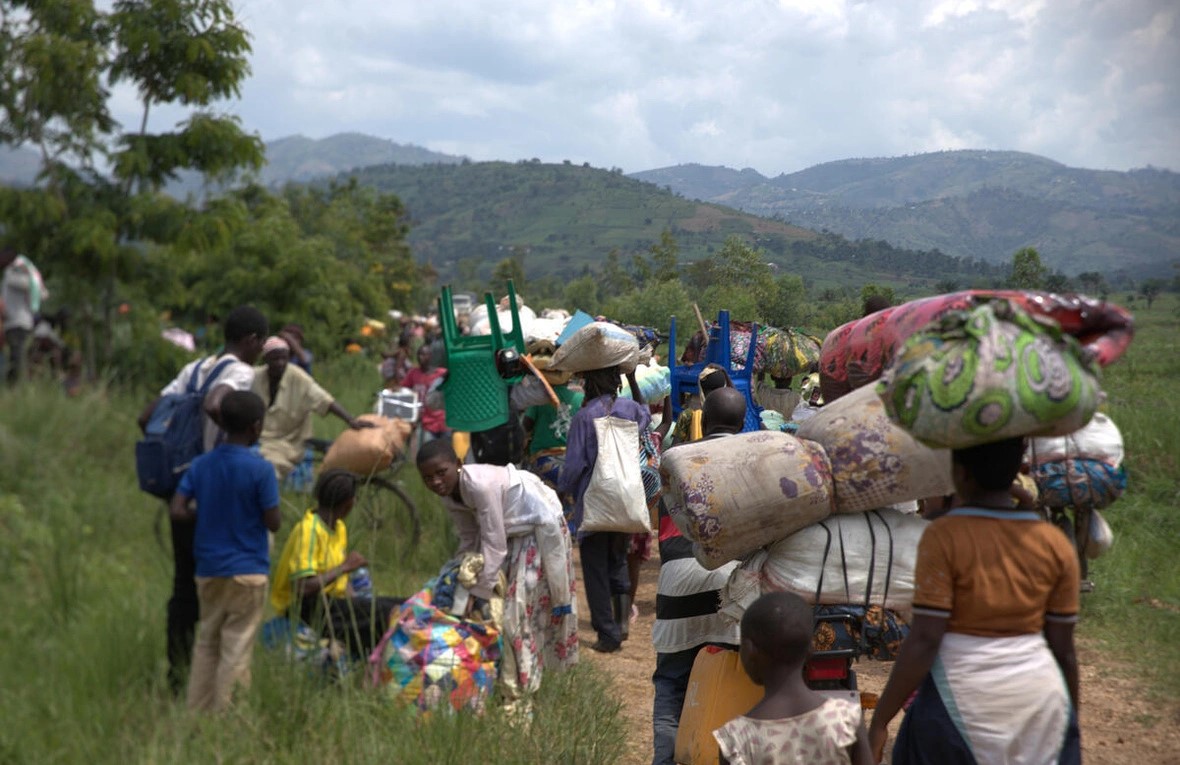
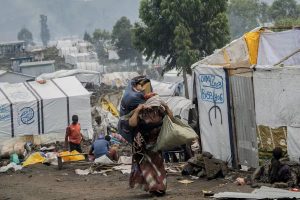
Over 1.2 million Congolese refugees live scattered across Africa—nearly half in Uganda alone. Some have been in exile for decades. Their children were born in refugee settlements. Their grandchildren know no other home. The June 2025 Washington Peace Agreement between DRC and Rwanda promised to “facilitate the safe, voluntary, and dignified return of refugees.” But for people who have spent 20, 30, sometimes 40 years displaced, the question is not just whether peace agreements will hold. It’s whether the institutions, states, and armed groups responsible for their displacement have created—or even intend to create—the conditions that would make return genuinely possible.
ALSO READ: Rwandan nationals returning from DR Congo surpass 7,000
By September 2025, over 8.2 million people were displaced within or from the Democratic Republic of Congo, projected to reach 9 million by the end of 2026. Of these, 5.8 million are internally displaced within DRC, while 1.2 million have sought refuge across Africa.
These are not temporary displacements. Many Congolese refugees have lived in exile since the 1990s—fleeing the First Congo War (1996-97), the Second Congo War (1998-2003), or the continuous cycles of violence that followed. UNHCR defines a “protracted refugee situation” as one where at least 25,000 refugees from the same country have been living in exile for more than five consecutive years. By this definition, Congolese refugees in Uganda, Rwanda, Burundi, Tanzania, and other neighboring countries constitute one of the world’s most entrenched protracted displacement crises.
In Uganda alone, which hosts nearly half of all Congolese refugee families, have lived in settlements like Nakivale (established in 1958) for generations. The Ugandan government’s relatively progressive Self-Reliance Strategy, launched in 1999, provides refugees with land plots for subsistence farming, freedom of movement, and access to basic services. Yet despite these policies, refugees remain excluded from Ugandan citizenship. Their children were born in Uganda, and their grandchildren grew up stateless or with tenuous legal status, trapped in permanent temporality.
This is the reality facing the 1.2 million Congolese refugees when peace agreements promise “return”: for many, the place they’re supposed to return to exists only in memory or family stories. Home is an abstraction, not a lived experience.
The Washington Peace Agreement and Its Promises
On June 27, 2025, the Democratic Republic of Congo and Rwanda signed the Washington Peace Agreement, brokered by the United States under President Trump’s administration. The agreement commits both countries to “facilitate the safe, voluntary, and dignified return of refugees.”
On July 24, 2025, DRC, Rwanda, and UNHCR adopted a Tripartite Technical Working Group Road Map on Voluntary Repatriation and Reintegration, outlining specific commitments to support refugee returns. UNHCR facilitated 5,000 returns in 2025 and plans to facilitate the voluntary repatriation of 10,000 Rwandan refugees from DRC in 2026.
For Congolese refugees, parallel frameworks exist. The 2025-2026 Regional Refugee Response Plan seeks $690.2 million to protect and assist 2.1 million refugees and host communities, with a focus on building resilience and self-reliance within communities to move toward lasting solutions.
These frameworks use all the right language: voluntary return, safe and dignified repatriation, sustainable reintegration, and durable solutions. But language means nothing without the conditions that make a return genuinely viable.
For refugees to return safely and sustainably, the Congolese state must fulfill responsibilities it has systemically failed to meet for decades.
1. Security and Protection
The most fundamental requirement is physical safety. Refugees fled because armed groups, state forces, or intercommunal violence threatened their lives. They will not and should not return while those threats persist.
Currently, eastern DRC hosts over 250 armed groups competing for territory, resources, and political influence. The Congolese military (FARDC) is underfunded, poorly equipped, and in some areas collaborates with the very militias it’s supposed to combat. State authority barely extends beyond provincial capitals. In vast rural territories where most refugees originated, non-state armed groups function as de facto governments.
The DRC government’s first responsibility is to establish genuine territorial control and rule of law in the areas where refugees fled. This requires not just military operations against armed groups, but also comprehensive security-sector reform: professionalizing the army, rooting out corruption, ending military-militia alliances, and building police and judicial institutions capable of protecting civilians.
None of this is happening at scale. M23’s capture of Goma and Bukavu in January 2025, the continued expansion of armed group territories, and the complete breakdown of state services in conflict zones demonstrate that the Congolese state currently lacks either the capacity or political will to provide the security that would make refugee return viable.
2. Land and Property Rights
Most Congolese refugees fled rural areas where they owned or had customary rights to land. After 20-30 years, what happened to that land?
In many cases, it was occupied by other displaced people, purchased by elites, seized by armed groups, or has become contested territory in intercommunal conflicts. Refugee families who return after decades often find their homes destroyed, their fields claimed by others, and no legal mechanism to reclaim property rights.
The DRC government must establish functioning land titling and property restitution systems, particularly difficult in provinces where customary law, state law, and armed group control create overlapping and contradictory claims. Without clear property rights and dispute resolution mechanisms, returnees arrive to find they have nowhere to live and no means of livelihood.
Current Congolese institutions are woefully inadequate for this task. Courts barely function in many areas. Land registries are incomplete or corrupted. Local authorities often lack the power to enforce property rights against armed groups or powerful individuals who’ve seized land.
3. Basic Services and Infrastructure
Refugees will not return to areas without healthcare, education, clean water, or economic opportunities.
Eastern DRC’s service infrastructure has collapsed. Schools and hospitals that existed before the wars are now ruins. Roads are impassable. Markets don’t function in areas controlled by armed groups. The few health facilities that operate are overwhelmed and undersupplied—as evidenced by the sexual violence treatment crisis and malnutrition emergency documented earlier.
The DRC government must invest massively in rebuilding infrastructure and service delivery in rural areas. This requires not just initial construction but sustained funding to operate and maintain facilities—a challenge for a state that loses hundreds of millions annually to mineral smuggling and corruption.
4. Economic Reintegration
Return is sustainable only if people can earn livelihoods.
Congolese refugees in Uganda or other host countries have spent decades building lives, however precarious. They’ve developed skills, established small businesses, and created trade networks. Some have become professionals—teachers, nurses, shopkeepers.
What jobs exist for them in eastern DRC? What markets can absorb returning farmers? What opportunities exist for educated urban refugees returning to provinces where formal employment barely exists?
The DRC government needs comprehensive economic reintegration programs: access to land, agricultural inputs, credit for small businesses, skills training for employment, and policies that create economic opportunities rather than just humanitarian handouts.
Current DRC economic policy does not prioritize return areas. Investment flows to mining regions controlled by armed groups or to Kinshasa. Rural eastern provinces where refugees would return remain economically marginalized, offering few prospects for sustainable livelihoods.
5. Reconciliation and Social Cohesion
Many refugees fled intercommunal violence. They’re returning to communities where ethnic tensions, land disputes, and grievances from past atrocities remain unresolved.
Without reconciliation processes, returnees risk retriggering the very conflicts that displaced them. This requires truth-telling, accountability for past abuses, communal dialogue, and mechanisms to address historical grievances.
The DRC government has done virtually nothing in this area. War crimes remain unpunished. Perpetrators of massacres sometimes hold government positions or command military units. Victims have no justice, no acknowledgment of their suffering, no reparations.
In this environment, return doesn’t resolve displacement—it simply relocates it, as intercommunal tensions reignite and people flee again.
Regional States: Rwanda and Uganda’s Dual Roles
Rwanda and Uganda play paradoxical roles in both perpetuating displacement and hosting refugees—making their responsibilities particularly complex and fraught.
Rwanda: Sponsor of Displacement, Facilitator of Return?
Rwanda’s public admission in January 2026 of “security coordination” with M23 makes explicit what UN experts have documented for years: Rwanda is directly responsible for displacement in eastern DRC.
Rwandan military forces have fought alongside M23, provided weapons and training, and supported territorial seizures that displaced millions. The July 2025 UN Group of Experts report concluded that Rwanda’s military engagements “aimed at conquering additional territories” and “secured Rwanda’s access to mineral-rich territories.”
Now, Rwanda is simultaneously:
- Continuing military support for armed groups displacing the Congolese
- Hosting approximately 80,000 Congolese refugees
- Signatory to agreements facilitating refugee return
- Planning voluntary repatriation of 10,000 Rwandan refugees from DRC
This creates moral and practical contradictions. How can Rwanda credibly facilitate safe refugee return to areas its military forces are making unsafe? How can a “voluntary” return be ensured when the state pressuring return is also sponsoring the violence that refugees are supposedly returning from?
Uganda: Progressive Host, Problematic Neighbor
Uganda presents a different paradox. Its refugee policies are among Africa’s most progressive, providing land, freedom of movement, and service access to over 1.6 million refugees, nearly half of them Congolese.
Yet Uganda also has documented involvement in the eastern DRC’s conflicts and mineral smuggling networks. UN reports have repeatedly noted Uganda’s military presence in DRC and its role as a transit point for illegally smuggled minerals, particularly gold.
Uganda’s responsibility is twofold:
As a host country, continue progressive policies while addressing emerging challenges. Funding cuts have reduced food assistance to below $8 per person monthly. Camps are severely overcrowded. Nyakabande hosts 621% more people than the designed capacity. Tensions between refugees and host communities are increasing as resources dwindle, and competition for land intensifies.
UNHCR’s per capita spending on refugees in Uganda dropped from $95 in 2015 to $36 in 2025, even as refugee populations increased. For refugee return to be genuinely voluntary, conditions in host countries don’t need to be punitive. Uganda must maintain adequate support so that people who choose to stay can do so with dignity, and those who return do so because home has become viable, not because exile became unbearable.
As a regional actor: End any military involvement in eastern DRC, close borders to mineral smuggling, and support rather than undermine Congolese state authority. Uganda’s economic interests in eastern DRC’s instability, through mineral trade and cross-border commerce, create perverse incentives to maintain conditions that prevent refugee return.
UNHCR bears primary international responsibility for facilitating refugee returns through its “durable solutions” framework. The organization operates on principles that return must be voluntary, safe, and dignified, with emphasis on sustainability rather than just physical movement.
The Funding Crisis Undermining Returns
UNHCR’s 2026 DRC strategy prioritizes “strengthening legal frameworks, asylum systems, and inclusion of displaced people in national structures” while maintaining “emergency response capacity” and advancing “durable solutions through community-based mechanisms.”
The problem is resources. UNHCR appeals for urgent funding to sustain voluntary returns and reintegration, warning that momentum achieved is “at serious risk due to funding shortfalls, which could halt planned repatriation and reintegration activities and leave thousands of refugees stranded and dependent on humanitarian aid.”
The 2025 UN Humanitarian Response Plan for DRC requires $2.19 billion. Only 23% was funded by late 2025. UNHCR needs hundreds of millions for refugee operations, but receives a fraction.
This funding crisis means:
- Inadequate assistance for returnees to rebuild homes and livelihoods
- Insufficient support for host communities absorbing returnees
- Limited capacity to monitor whether returns remain voluntary
- Inability to provide sustained reintegration programs beyond the initial return
Without adequate funding, “voluntary return” risks becoming forced displacement disguised as durable solutions. Refugees may return not because home is safe but because humanitarian assistance in host countries has become unsustainable.
The Voluntary Return Paradox
UNHCR emphasizes that returns must be voluntary, meaning refugees themselves decide to return based on accurate information about conditions in their origin areas.
But how voluntary is the return when:
- Funding cuts make remaining in exile increasingly untenable?
- Do host countries face political pressure to reduce refugee populations?
- Peace agreements create expectations of mass returns regardless of actual safety?
- Refugees lack reliable information about conditions in the return areas.
Historical precedent is troubling. In September 2002, Rwanda forcibly returned over 7,000 Congolese refugees to remote eastern DRC, 60 miles from Goma. They had no choice but to occupy abandoned buildings or create makeshift shelters. Their displacement continued as internally displaced people returned without resolution.
U.S. Committee for Refugees and Immigrants (USCRI) documented decades of forced repatriation in the Great Lakes region, warning that “high-level statements have not always ensured effective implementation in the past.”
UNHCR must maintain vigilance that “voluntary” return frameworks aren’t manipulated by states seeking to reduce refugee burdens, regardless of safety in origin areas.
The Citizenship Crisis
Uganda’s refugee policies provide many rights but not citizenship. The Ugandan Citizenship and Immigration Control Act explicitly excludes refugees from citizenship by registration, even after decades of residence. Children born in Uganda to refugee parents inherit their parents’ refugee status or risk statelessness.
In the DRC, naturalization requires National Assembly approval and demonstrating “major services” to the country criteria virtually impossible for refugees to meet.
This creates impossible situations: people who belong nowhere legally. They cannot claim Ugandan citizenship despite being born and raised there. They cannot access Congolese citizenship for a country they’ve never lived in. They exist in permanent legal limbo.
International law provides that children have the right to a nationality, yet refugee children in the Great Lakes region routinely experience statelessness or precarious legal status that perpetuates across generations.
The Question of Belonging
Even if legal citizenship were resolved, the deeper question is belonging. Where do people who’ve spent decades in exile actually belong?
Studies of returnees in other protracted displacement contexts (like Syria) show that return often involves “rebuilding state-society relations” and “reestablishing economic, political, and social ties” that displacement disrupted. For long-term refugees, returning means being strangers in what’s supposed to be home.
Language barriers affect children who grew up speaking Swahili in Tanzania, who may struggle with Lingala-speaking communities in western DRC. Cultural norms diverge; refugees who spent decades in Uganda operate with different expectations about governance, law, and social organization than those who remained in DRC.
Economic integration is particularly fraught. Returnees who developed skills relevant to host countries (tailoring for Ugandan markets, languages useful in Kampala) may find that those skills have no value in rural eastern DRC. Meanwhile, they lack the local knowledge and networks necessary for economic survival in communities they left decades ago.
Sustainable return for long-term refugees requires not just physical relocation but intensive social and economic reintegration support that acknowledges they are effectively migrants to their country of origin.
Return Without Resolution
The 1.2 million Congolese refugees scattered across Africa live in a perpetual present tense. Not quite belonging where they are, unable to safely return where they’re from, trapped in legal and social limbo that can span generations.
Peace agreements promise a return. Tripartite frameworks establish mechanisms. UNHCR plans voluntary repatriation programs. But without fundamentally addressing the conditions that created and perpetuate displacement, these frameworks offer management, not resolution.
Return is technically possible; people can physically be moved from Uganda to DRC. But sustainable return, where people rebuild lives with safety, dignity, and opportunity, requires transformations that current frameworks don’t mandate and that responsible actors show no willingness to undertake.
Rwanda can continue military support for armed groups while signing return agreements. DRC can promise reforms without building capacity. Uganda can maintain progressive refugee policies while benefiting from Congolese instability. Armed groups can negotiate frameworks while sustaining parallel governance. International organizations can facilitate returns without adequate reintegration funding.
And refugees, caught in the middle of these failures, will continue living the consequences.
Some will return because humanitarian assistance in host countries becomes unsustainable, not because home is safe but because exile becomes unbearable. They will arrive to find destroyed villages, seized land, absent services, and the same armed actors who displaced them still operating with impunity.
Others will remain in exile, their children growing up stateless, their grandchildren inheriting displacement as a permanent condition, their connection to DRC fading with each generation until “return” becomes meaningless.
This is not a durable solution. It’s the perpetuation of a crisis that those responsible, the DRC government, Rwanda, Uganda, armed groups, and the international community, lack either the capacity or commitment to resolve.
Until that changes, every peace agreement, every return framework, every promise of safe repatriation is not a pathway home. It’s another chapter in the longest displacement story in Africa, written by those who create crises and read by those who pay the price.
KIVUPOST.COM is committed to holding all actors accountable, governments, armed groups, regional states, and international organizations, for their roles in creating and perpetuating displacement. We exist to document not just diplomatic frameworks but their real-world impacts on the lives of refugees who deserve more than broken promises.
This analysis is based on UNHCR reporting, UN documentation, tripartite agreement texts, historical records of refugee return, and testimonies from affected communities. We call for genuine accountability, sustained funding, comprehensive state-building, and peace frameworks that prioritize refugee safety and agency over political expediency.