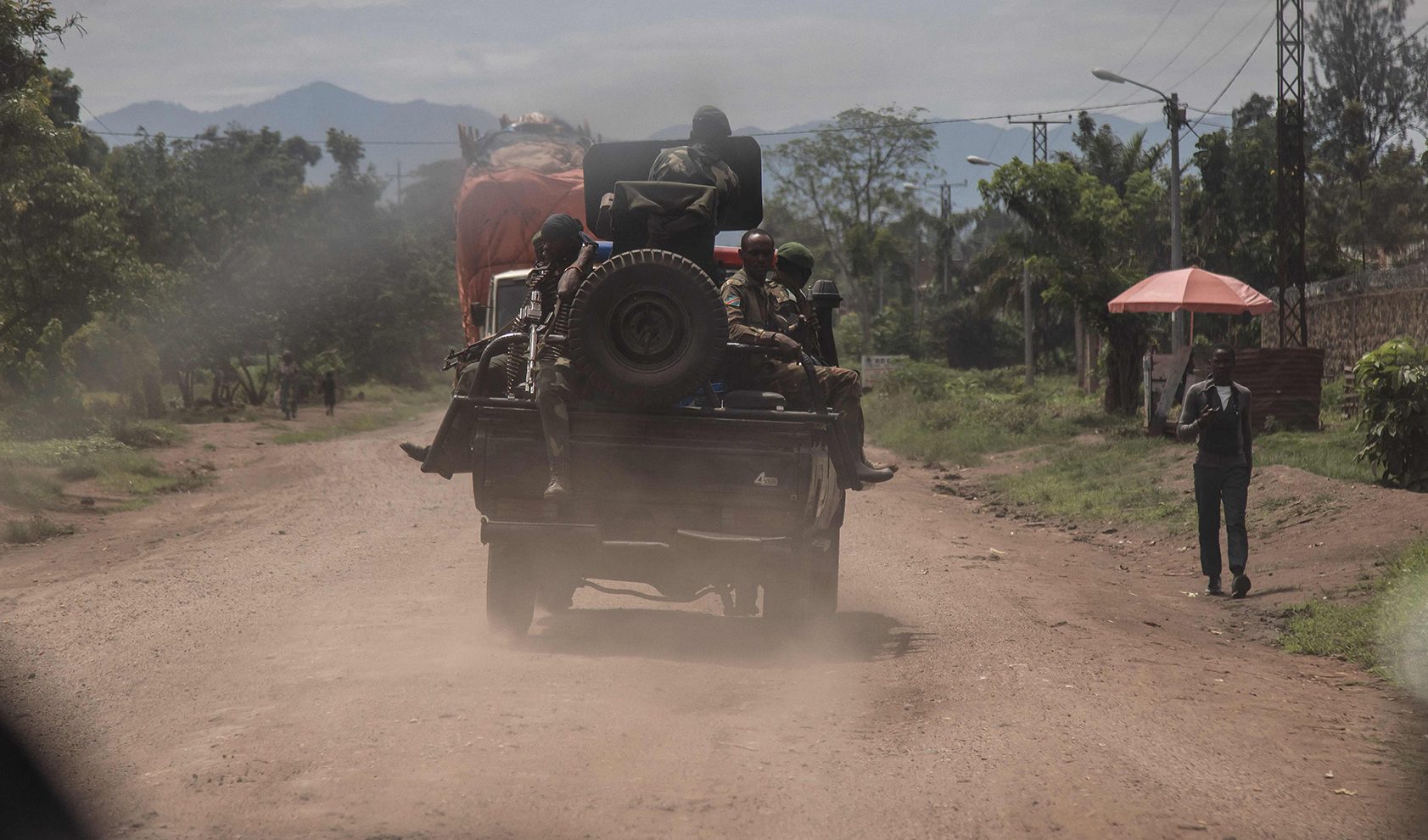
For people in Kinshasa, the East is an occupied zone under foreign aggression. For people in Goma, it is a liberated zone under new authority. Both are living in the same country, and they no longer share the same reality. Former President Kabila has a word for this trajectory: Sudanization.
Samy, writing from the Livulu neighbourhood of Kinshasa, put it simply: “Security perceptions vary according to each person’s realities. Those who feel insecure in the East often feel safe in Kinshasa, while those who live securely in the East sometimes experience a sense of insecurity in Kinshasa. Viewpoints diverge: some, close to Kinshasa, describe the East of the DRC as an ‘occupied zone’, while others, linked to the AFC/M23, speak rather of a ‘liberated zone’.”
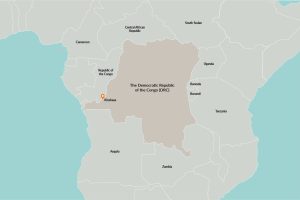
It is a deceptively quiet observation. Behind it lies something that should alarm everyone who cares about the Democratic Republic of Congo: the progressive fracturing of a shared national reality. Goma and Kinshasa are 1,600 kilometres apart. In 2026, they might as well be in different countries because, in every meaningful sense except the legal one, they increasingly are.
ALSO READ: Kabila Explains Why He Stays in Goma Under AFC/M23 Control
“Some, close to Kinshasa, describe the East of the DRC as an ‘occupied zone’, while others, linked to the AFC/M23, speak rather of a ‘liberated zone’.”— Samy, Kinshasa resident, Livulu
Kabila’s Warning: Not Balkanization, Sudanization
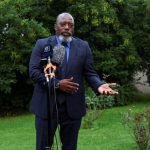
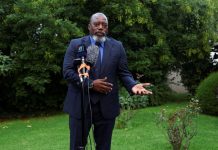
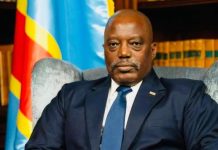
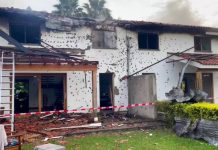
Former President Joseph Kabila, now informally aligned with M23, his family’s Goma residence situated near the epicentre of the March 11 drone strike that killed French UNICEF worker Karine Buisset, recently gave one of his most striking public analyses of the crisis. Speaking out on the drone attack and the broader trajectory of the conflict, he reached for a comparison that cuts deeper than the usual vocabulary of DRC debate.
“Many speak of balkanization,” he said. “I speak of the ‘Sudanization’ of the crisis.” He pointed to the conditions that led to Sudan’s fragmentation as a parallel. “We have to acknowledge that the conditions are right. And if we don’t manage the crisis properly, we risk having completely uncontrollable situations.”
The distinction between balkanization and Sudanization is precise and important. Balkanization implies a clean fracture into smaller states along ethnic or territorial lines, a feared outcome in Congo since the 1990s. Sudanization describes something more insidious: a country that remains formally unified but develops parallel governance, parallel economies, parallel security arrangements, and ultimately parallel identities until reunification becomes not merely politically difficult but psychologically unimaginable. Sudan did not formally split until 2011. But the psychological separation between North and South had been building for half a century.
Two DRCs, Living Side by Side
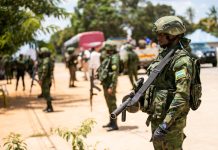
Evidence of Sudanization is evident in nearly every dimension of daily life. In Kinshasa, the AFC/M23 is referred to in government communiqués, on state television, and in the street as “the Rwandan aggressor” and its coalition as an occupation force. The drone strikes on Goma, which killed a French UNICEF worker, are framed as heroic acts of sovereignty, defensive operations against an illegitimate enemy in occupied territory.
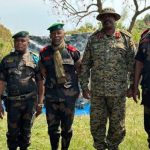
In Goma, where M23 has held power for over a year, the narrative is inverted. The AFC/M23 describes itself as a liberation movement that freed eastern Congo from decades of Kinshasa’s predatory governance: the theft of mineral revenues, the failure to protect communities, the endemic corruption and militarisation that left ordinary people defenceless for thirty years. Corneille Nangaa, the AFC’s political coordinator who hails from western Congo, not the east, frames the movement in explicitly national terms: not a regional rebellion, but a national revolution.
The practical consequence is that the two populations no longer share a common political reality. In Kinshasa, the eastern provinces are “occupied,” a word implying temporary displacement and rightful restoration. In Goma, they are “liberated,” a word implying a break from the past, not a return to it. These are not merely rhetorical differences. They reflect genuinely divergent lived experiences, security environments, and political loyalties that have been hardening for years.
Parallel Governance: M23’s State-Building Project
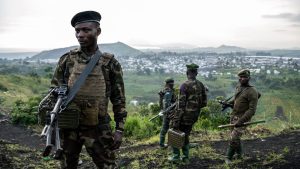
The AFC/M23 has not simply occupied territory. It has been building a parallel state. It collects taxes, operates checkpoints, controls customs revenue at border crossings, administers mining sites, including the Rubaya coltan complex, and has been gradually absorbing local administrative structures. Congolese government employees who remained in Goma have, in many cases, begun working under the de facto authority of the new administration simply because the Kinshasa state ceased to function there.
The Congolese government, for its part, shut down banks in Goma, intended to constrain M23 financially, but this primarily deepened hardship for ordinary residents. The government closed Goma’s airport to commercial and humanitarian traffic. Goma, a city of over a million people, now functions economically in a closer relationship to Kigali than to Kinshasa. Its residents open bank accounts in Rwanda. Its businesspeople transit through Rwanda to reach international flights. The umbilical cord to the Congolese capital, already weak, has been all but severed.
What Sudan Teaches and What the DRC Has Yet to Learn
Sudan’s journey to formal partition was not primarily driven by the 2011 referendum. It was driven by accumulated decades of governance failure, resource extraction from the periphery by the centre, the deployment of state violence against peripheral populations, and the gradual erosion of any shared identity that could survive political pressure. The referendum was the legal recognition of a psychological separation that had already occurred.
The parallel to the DRC is uncomfortable but impossible to dismiss. Eastern Congo has been systematically marginalised by Kinshasa for decades. Its mineral wealth has flowed out while its security crises have been mismanaged from thousands of kilometres away. The grievances the AFC uses to justify its revolt are not invented; they are grounded in a real and documented history of abandonment. That does not make the armed seizure of cities legitimate. But it means that drone strikes, siege economics, and territorial counter-offensives will not resolve what is fundamentally a political and governance failure accumulating for half a century.
Kabila identified the root problem with unusual precision: “The major problem in the DRC today is governance, lack of vision, and the fact that the Constitution is trampled underfoot.” Whatever one thinks of his own record in power, the observation stands on its merits.
The Clock Is Running
The window between Sudanization and something irreversible is not unlimited. Every month that passes under dual governance deepens the psychological separation. Every drone strike on Goma reinforces, for people in the east, the narrative that Kinshasa is the enemy. Every flag rally in Kinshasa reinforces, for people in the West, the narrative that the East is occupied territory to be reclaimed by force.
Samy from Livulu is not a diplomat or an analyst. He is a resident of a city that has not experienced war firsthand. But his observation that people in the same country have ceased to share the same security reality, and have therefore ceased to share the same political reality, is one of the most honest descriptions of what is happening to the DRC that anyone has offered. The country has not yet formally split. But it is learning, daily, to live as two.
Sources: AllAfrica (Kabila statement), Africa Center for Strategic Studies, Critical Threats Project / AEI (M23 state-building), CFR Global Conflict Tracker, Security Council Report (March 2026), The New Humanitarian, OCHA.