As AFRICOM concluded a landmark visit to Kinshasa to explore military cooperation with the FARDC, President Tshisekedi told traditional leaders in Kwilu that U.S. partnership would deliver a stronger army, major investment, and an end to the country’s cycle of war and suffering.
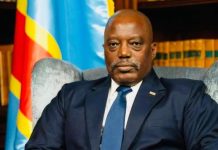
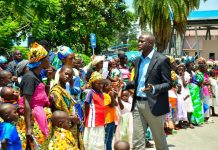
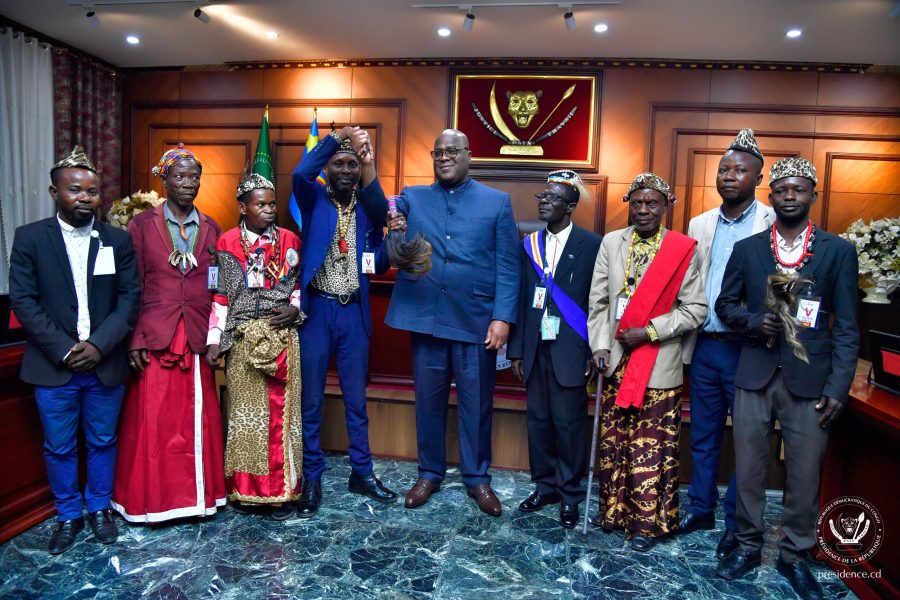
KINSHASA / BANDUNDU-VILLE — In the same week that a senior delegation from U.S. Africa Command (AFRICOM) wrapped up four days of military talks in Kinshasa, President Félix-Antoine Tshisekedi delivered a sweeping address to traditional and customary authorities in Kwilu, Bandundu-ville, invoking American partnership as the cornerstone of a new era for the Democratic Republic of Congo. Together, the two moments offer the clearest signal yet that Washington and Kinshasa are moving toward a significantly deepened strategic relationship.
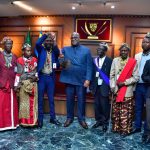
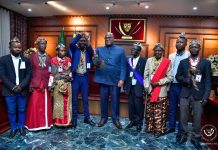
Speaking before community leaders whose authority spans some of the country’s most conflict-scarred territories, Tshisekedi painted an optimistic vision of what U.S. engagement could mean for ordinary Congolese: a restructured national army capable of defending its own borders, an influx of American capital into the country’s battered economy, new roads, new businesses, and a future in which Congolese children could find their place in a stable and prosperous country.
ALSO READ: DRC Defence Minister Visits Belgium’s Royal Military Academy in Push to Modernise FARDC
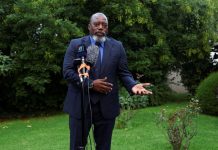
“The Americans will help us build an army to protect our country. They will bring their money, they will invest in Congo,” said President Félix-Antoine Tshisekedi, in Kwilu, Bandundu-ville.
AFRICOM Delegation Meets FARDC’s Top Brass
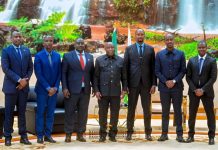
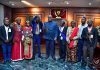
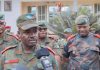
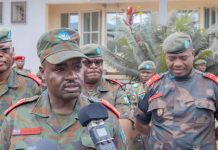
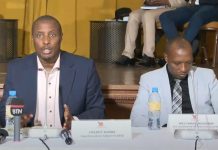
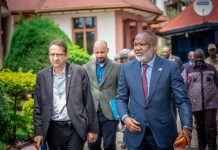
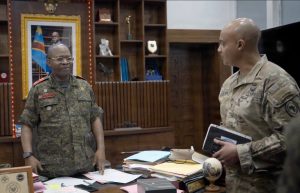
The backdrop to Tshisekedi’s address was a four-day AFRICOM visit to the DRC, from January 20 to 23, 2026, during which a cross-functional team led by Army Col. Michael Gacheru of AFRICOM’s Strategy, Engagement, and Programs Directorate held substantive talks with FARDC Chief of Staff Lt. Gen. Jules Banza Mwilambwe, Secretary General Maj. Gen. Marcel Lukwikila, and multiple other senior Congolese military officers.
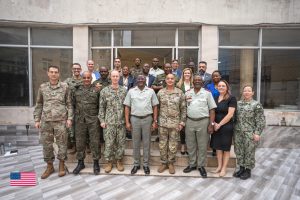
The delegation’s composition, bringing together experts in logistics, intelligence, training, and legal affairs, pointed to discussions that went well beyond protocol. The teams explored a range of potential security cooperation initiatives designed to strengthen the FARDC’s capabilities, build its operational independence, and bolster its capacity to confront the multiple armed threats destabilising eastern Congo, including the AFC/M23 coalition, the Allied Democratic Forces (ADF), and a host of smaller militant groups.
Col. Gacheru described the meetings as a first and significant step in what he envisioned as a long-term partnership, expressing gratitude for the Congolese military’s openness to cooperation. AFRICOM confirmed that additional visits are planned in the months ahead to develop and refine the most viable avenues of collaboration identified during the January talks.
A Presidential Vision: War Is Over, Prosperity Awaits
Tshisekedi’s remarks in Kwilu were striking both for their content and their audience. Addressing traditional and customary authority figures who wield deep influence over communities across the country’s interior, the president cast U.S. engagement as a turning point not just militarily but economically and developmentally. He described a future in which American investment would reshape the country’s physical infrastructure and create opportunities for the next generation of Congolese.
Most pointedly, Tshisekedi framed the anticipated transformation as the defeat of forces he accused of deliberately keeping Congo trapped in conflict for their own benefit. His words carried an unmistakable edge, suggesting that the country’s enemies, unnamed but implied, had sought to exploit Congo’s instability for resource extraction and geopolitical advantage. The partnership with America, in his telling, would mark the end of that era.
Strategic Context: Why This Moment Matters
The convergence of the AFRICOM visit and Tshisekedi’s public address reflects a deliberate repositioning of the DRC within the geopolitical landscape of central and eastern Africa. Kinshasa has long maintained a complex and sometimes distant relationship with Washington, but the severity of the current crisis, with vast swathes of North and South Kivu under the control of AFC/M23 and millions of civilians displaced, has created an opening for a closer bilateral alignment.
For Washington, increased engagement with the FARDC could serve multiple strategic interests: countering the influence of rivals operating in the region, securing access to the DRC’s extraordinary mineral wealth at a moment of global competition for critical raw materials, and demonstrating a proactive posture on African security at a time of intense geopolitical competition. For Tshisekedi, the relationship offers the prospect of military capacity-building and economic investment from the world’s most powerful military and economic actor.
Promises and Expectations: A High Bar to Clear
The expectations Tshisekedi has set publicly, before community leaders in Kwilu, are substantial. Promises of a rebuilt army, American investment, new roads and businesses, and an end to the country’s cycle of violence will resonate powerfully with populations that have endured decades of armed conflict, economic marginalisation, and broken government commitments. The political stakes of under-delivery are correspondingly high.
Whether the U.S.-DRC partnership will move quickly enough, and at sufficient scale, to meet those expectations remains deeply uncertain. Military cooperation frameworks take time to develop, and the economic investment Tshisekedi envisions requires political stability that eastern Congo has yet to achieve. The AFRICOM visit is, as Col. Gacheru acknowledged, a first step, not an arrival. The distance between that first step and the destination Tshisekedi described in Bandundu-ville is considerable, and the road, by Congo’s own history, is rarely straight.